Endpunkte der Mikrochirurgie
Evidenz zu Lappenrettung, Gewebereplantation und Kostenwirksamkeit für die FDA-510(k)-zugelassene Indikation
FDA-freigegebene Indikation
Die Beseitigung der venösen Stauung bei der mikrochirurgischen Lappenrettung und der Gewebereplantation ist FDA 510(k)-zugelassen (K040187, 2004; K132958, 2014; K140907, 2015). Dies ist die einzige FDA-freigegebene Indikation für medizinische Blutegel in den Vereinigten Staaten. Medizinische Blutegel sind als nicht-exempte FDA 510(k)-zugelassene Medizinprodukte eingestuft.
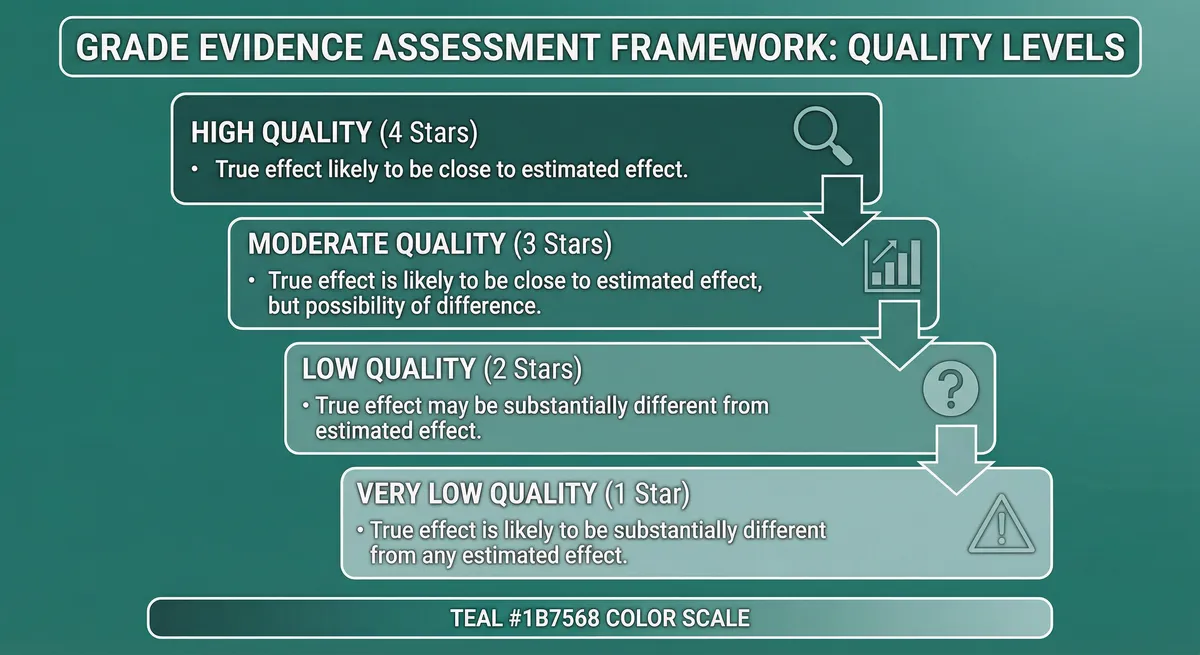
GRADE-Evidenzniveau: Moderat
RCTs mit Einschränkungen oder solide Beobachtungsstudien
Status der FDA-510(k)-Freigabe
510(k)-Freigaben für medizinische Blutegel
| 510(k)-Nummer | Jahr | Antragsteller | Jährliche US-Versorgung (geschätzt) |
|---|---|---|---|
| K040187 | 2004 | Ricarimpex SAS (Frankreich; über 150 Jahre Zuchtgeschichte) | siehe FDA AccessData |
| K132958 | 2014 | Biopharm (UK) Ltd. (über Carolina Biological Supply Co.) | siehe FDA AccessData |
Regulatorischer Übergang 2024
Endpunkt-Metriken auf einen Blick
78%
Overall Rettung Rate
Bestätigt by two unabhängig systematische Übersichtsarbeiten (Whitaker 2012; Kuhn 2019)
92%
Prophylactic Rettung
vs. 67% reactive (p<0.05) in Fingerreplantation
14,4%
Infection Rate
<5% mit prophylaxis; 0% in Nguyen et al. 2012
49,75%
Transfusion Rate
Serial hematocrit monitoring required every 4-8 Stunden
Systematische Übersichtsarbeiten: Konvergierende Evidenz
Die Evidenz für die blutegelvermittelte Lappenrettung stammt überwiegend aus systematischen Übersichtsarbeiten von Fallserien — eine Designbeschränkung, die durch die klinische Unmöglichkeit bedingt ist, Patienten mit versagenden Lappen randomisiert einer Blutegeltherapie versus keiner Intervention zuzuordnen. Einem Patienten mit einem akut versagenden Lappen eine FDA-freigegebene Intervention vorzuenthalten, wäre ethisch nicht vertretbar. Trotz dieser Einschränkung liefert die Übereinstimmung von vier unabhängigen systematischen Übersichtsarbeiten bezüglich einer Rettungsrate von 65-83 % eine solide Evidenz für die klinische Praxis.
| Studie | Design | Population (n=) | Intervention | Primäres Outcome | Ergebnis |
|---|---|---|---|---|---|
| Whitaker et al. 2012 | Systematische Übersichtsarbeit | Plastic und rekonstruktiv Chirurgie Patienten mit venöse Stauung über 67 publications (1966-2009) (n=277) | Therapie mit medizinischen Blutegeln zur Lappenrettung und Gewebereplantation | Overall Gewebe Rettungsrate, complication profile | 78% Rettung (216/277); 88,3% ohne infection vs. 37,4% mit infection Landmark review. 49,75% transfusion rate; 14,4% Infektionsrate; 21,8% overall complication rate. Male:female ratio ~2:1; age range 2-81 Jahre |
| Herlin et al. 2017 | Systematische Übersichtsarbeit + retrospective cohort | Free flap Patienten mit venöse Stauung (n=4) | Medicinal Blutegel mit ciprofloxacin + TMP-SMX prophylaxis; 41 Studien reviewed + own 43-Patient series | Lappenrettungsrate nach Zeitpunkt der Intervention | 83,7% Rettung innerhalb von 24 Stunden nach Einsetzen der Stauung; 38,6% bei Verzögerung über 24 Stunden hinaus 45-Prozentpunkt decline mit delayed Therapie. Recommended cipro + TMP-SMX as first-line prophylaxis. Optimal frequency: every 2-8 Stunden; duration: 4-10 Tage |
| Kuhn et al. 2019 | Umfassend review | All plastic und rekonstruktiv Chirurgie flap Patienten (n=NR) | Therapie mit medizinischen Blutegeln als Behandlungsstandard zur venösen Dekompression | Bestätigung der Rettungsrate und Einordnung als Behandlungsstandard | 78% Rettung bestätigt; die Blutegeltherapie wurde als Behandlungsstandard eingeordnet, wenn eine chirurgische Revision versagt Published in Plastic und rekonstruktiv Chirurgie — Global Open. Bestätigt FDA-510(k)-Freigabe since 2004 |
| Smolle et al. 2024 | Systematische Übersichtsarbeit | Patientinnen mit Brustrekonstruktion (75% rekonstruktiv, 25% andere Brustoperationen); 18 Studien (4 Fallserien, 14 Fallberichte) (n=4) | Therapie mit medizinischen Blutegeln bei Lappenstauung; im Median 2 Blutegel/Sitzung, 3 Sitzungen/Tag, 3 Tage Dauer | Gewebe Rettungsrate und complication burden | 75% Rettung; 81% complication rate (infection und anemia) Erste systematische Übersichtsarbeit, die sich speziell der Brustchirurgie widmet. Sie kam zu dem Schluss, dass die Blutegeltherapie angesichts der hohen Komplikationslast mit Bedacht eingesetzt werden muss |
Key Convergence Points
Three principal systematische Übersichtsarbeiten konvergieren in a Rettungsrate of approximately 78%. Whitaker et al. (2012) etabliert this benchmark über 277 cases und 67 publications spanning four decades. Kuhn et al. (2019) independently bestätigt the 78% rate und positioned leech Therapie as the standard of care when chirurgisch revision fails oder is not technically feasible. Herlin et al. (2017) gezeigt that timing is the dominant prognostic variable: 83,7% Rettung innerhalb 24 Stunden of congestion onset versus only 38,6% beyond 24 Stunden — a 45-Prozentpunkt decline that highlights the urgency of early intervention.
Smolle et al. (2024) contributed the first body-region-specific systematische Übersichtsarbeit für breast Chirurgie, documenting a 75% Rettung rate mit an 81% complication rate — reflecting the greater complexity of groß-volume flap management compared to digits und ears.
Herlin et al. drew an important mechanistic distinction: leech Therapie is wirksam für intrinsic venöse Insuffizienz innerhalb the flap (microthrombi, inadequate venös outflow) jedoch is unlikely to Rettung a flap mit proximal venös anastomosis oder pedicle obstruction , which requires chirurgisch revision.
Klassifikation der Evidenzstufen
Timing und Anwendungsstrategie
Zeit ist Gewebe
Pathophysiologie der venösen Stauung
- Venöse Obstruktion oder Insuffizienz durch Thrombose, Abknickung, Vasospasmus oder inadäquate Anastomose
- Blut sammelt sich im Gewebe an; der interstitielle Druck steigt
- Die kapilläre Perfusion kommt zum Erliegen, da der arterielle Zufluss durch den erhöhten venösen Rückstaudruck behindert wird
- Gewebeischämie und Ödem entwickeln sich; der Lappen wird induriert und zyanotisch
- Mikrothromben kaskadieren in den kleinen Gefäßen
- Ohne Intervention tritt innerhalb von 6-8 Stunden eine irreversible Nekrose auf
1. Aktive Blutentnahme
Jeder Blutegel nimmt während einer 30- bis 90-minütigen Saugphase 5–15 mL auf und erzeugt so eine sofortige mechanische Dekompression. Der Unterdruck durch die Kontraktion der peripharyngealen Muskulatur zieht das venöse Blut aktiv aus dem gestauten Gewebebett ab.
| Studie | Design | Population (n=) | Intervention | Primäres Outcome | Ergebnis |
|---|---|---|---|---|---|
| Soucacos et al. 1994 | Fallserie | Replanted fingers/hands (29 Patienten) und free Gewebe transfers (18 Patienten) (n=29) | Blutegeltherapie bei venöser Insuffizienz nach Replantation und Gewebetransfer | Rückbildung der venösen Insuffizienz | 24/29 Replantation cases und 18/18 Gewebe transfer cases salvaged (83% Replantation; 100% free Gewebe transfer) Eine der größten monozentrischen Fallserien zur Finger-/Handreplantation |
| Hayden et al. 1988 | Animal experimental (porcine model) | Sakral skin flaps mit induced venös occlusion in pigs (n=NR) | Anwendung medizinischer Blutegel mit Überwachung des Blutflusses mittels Laser-Doppler | Blutfluss restoration in congested flaps | Substantial Blutfluss Zunahme innerhalb 1 Stunde in all 9 congested cases Präklinische Bestätigung des Mechanismus der Mikrozirkulationsverbesserung. Schuf die experimentelle Grundlage für den klinischen Einsatz |
| Unkontrollierter Bericht (nicht verifizierbar) 1998 | Kontrolliert Studie | Pharynx/esophagus defects (98 Patienten) und auricular injuries (12 Patienten) (n=98) | Pre- und postoperative Hirudotherapie mit interstitial polarography monitoring | Gewebe oxygen restoration und transplant viability | Oxygen restored in 69,9%; relative normal in 30,2%. Functional Endpunkte improved 26.2-48,4% vs. controls Zählt zu den größten publizierten Fallserien. Marginale Lappennekrose in nur 12-30 %. Transplantatvitalität in allen Fällen erhalten |
| Nguyen et al. 2012 | Fallserie | Native skin (5), local flaps (6), regional flaps (14), free flaps (14) (n=NR) | Blutegeltherapie mit prophylaktischer Antibiotikagabe bei venöser Stauung | Rettungsrate by flap type; Aeromonas Infektionsrate mit prophylaxis | 100% Rettung (native/local); 33% salvaged, 33% partial, 33% lost (regional/free). 0% Aeromonas infections Die erfolgreich erhaltene Gruppe benötigte signifikant weniger Blutegel (38 vs. 158). Die prophylaktische Antibiotikagabe verhinderte Aeromonas-Infektionen vollständig |
Einfluss der Infektion auf den Erhalt
Whitaker et al. (2012) gezeigt that Aeromonas infection catastrophically reduces Rettung Endpunkte: 88,3% Rettung ohne infection vs. 37,4% mit infection — a 51-Prozentpunkt decline. Dies single Befund justifies the mandatory Antibiotikaprophylaxe Protokolle now universally recommended. Infection prevention is the die meisten impactful modifiable factor in Behandlung Endpunkte.
Leech Consumption as Prognostic Indicator
Nguyen et al. (2012) found that the salvaged group required significantly fewer Blutegel (38 +/- 34 mean) than the lost group (158 +/- 224 mean), suggesting that early günstig Ansprechen is a prognostic indicator. Hoch leech consumption ohne clinical Verbesserung innerhalb 48 Stunden sollte prompt reassessment of the diagnosis, einschließlich Evaluation für proximal venös obstruction requiring chirurgisch revision.
Ansprechkriterien
Evidenz zur Fingerreplantation
FDA-freigegebene Indikation
Die Fingerreplantation mit venöser Stauung fällt unter die FDA 510(k)-zugelassene Indikation zur venösen Dekompression. Die prophylaktische Blutegelanwendung erreicht ein Fingerüberleben von 92% gegenüber 67% bei reaktiver Anwendung (p<0,05).
Die distale Fingerkuppenamputation auf Höhe oder distal des distalen Interphalangealgelenks stellt ein einzigartiges mikrochirurgisches Problem dar. Auf dieser Ebene sind die Venen typischerweise zu klein (0,3-0,5 mm) für eine zuverlässige Anastomose. Selbst wenn eine venöse Rekonstruktion versucht wird, sind die Thromboseraten hoch. Das Ergebnis ist ein replantierter Finger mit arteriellem Zufluss, aber unzureichendem venösem Abfluss — die präzise Indikation, für die die FDA im Jahr 2004 medizinische Blutegel zuließ. Vor der Einführung der Blutegeltherapie war die Rettungsrate für distale Fingerkuppenamputationen ernüchternd. Blutegel verwandelten diese Indikation von einer nahezu sicheren Misserfolgsprognose in ein Verfahren mit realistischen Rettungsaussichten.
| Studie | Design | Population (n=) | Intervention | Primäres Outcome | Ergebnis |
|---|---|---|---|---|---|
| Prophylactic vs. reactive Studie 2020 | Retrospective cohort | Distal Fingerreplantation Patienten (n=NR) | Prophylactic leeching (before congestion develops) vs. reactive leeching (after congestion is clinically apparent) | Complete digit survival und early complication rate | 92% survival (prophylactic) vs. 67% survival (reactive); p<0.05 Early complications 8% (prophylactic) vs. 50% (reactive). 25-Prozentpunkt Verbesserung stellt dar a paradigm shift toward prophylactic Protokoll |
| Soucacos et al. 1994 | Fallserie | Replanted fingers/hands (29 Patienten) mit venöse Insuffizienz (n=29) | Blutegeltherapie bei venöser Stauung nach Finger-/Handreplantation | Digit/hand Rettungsrate | 24/29 cases salvaged (83%) Eine der größten monozentrischen Fallserien zur Fingerreplantation mit Blutegeltherapie |
| De Sena et al. 2019 | Retrospective cohort | Digit revascularization und Replantation Patienten (n=NR) | Blutegeltherapie mit variabler Behandlungsdauer; identifizierter Schwellenwert von 4,5 Tagen | Digit survival by leeching duration | Digits leeched >4.5 Tage had significantly higher survival rates Longer leeching associated mit higher transfusion incidence und longer Krankenhausaufenthalt. Important für Kosten-efficiency calculations |
| Brody, Maloney & Hentz 1989 | Fallserie | Fingerreplantation Patienten mit relative contraindications für procedure (n=NR) | Blutegeltherapie, wenn eine venöse Rekonstruktion technisch nicht möglich war | Digit Rettung; infection und transfusion rates | All digits salvaged; keine infections; keine transfusions required Unusually günstig complication profile. Gezeigt feasibility in hoch-risk Patienten mit relative contraindications |
| Barnett 1998 | Fallserie | Vollständige Fingerkuppenamputationen distal des DIP-Gelenks (n=NR) | Rein arterielle Replantation mit Blutegeltherapie zur venösen Dekompression | Rettung der Fingerkuppe bei Amputationen, bei denen eine venöse Rekonstruktion nicht möglich war | Erfolgreiche Replantation in der Mehrzahl der Fälle; die Blutegeltherapie erhielt den venösen Abfluss bis zur Neovaskularisation aufrecht Belegte die Durchführbarkeit des rein arteriellen Replantationsverfahrens bei distalen Amputationen |
Prophylaktisches vs. reaktives Ansetzen von Blutegeln
Eine retrospektive Studie an 25 Fingern (12 reaktiv, 13 prophylaktisch) zeigte eine Verbesserung der Überlebensrate um 25 Prozentpunkte (von 67% auf 92%) und eine deutliche Reduktion früher Komplikationen (von 50% auf 8%) beim prophylaktischen Ansetzen von Blutegeln. Die Konsequenz: Bei der Replantation distaler Finger, bei denen eine venöse Anastomose fehlt oder unzuverlässig ist, sollte das prophylaktische Ansetzen von Blutegeln (2- bis 3-mal täglich ab der frühen postoperativen Phase) als Teil des postoperativen Standardprotokolls eingeleitet werden, anstatt abzuwarten, bis sich eine Stauung entwickelt.
| Parameter | Frequency | Action Threshold |
|---|---|---|
| Hemoglobin/Hematocrit | Alle 4 Stunden während der aktiven Blutegeltherapie | Transfuse pRBC if Hgb <7 g/dL (<8 g/dL mit cardiac comorbidity) |
| Thrombozyten count | Every 8 Stunden | Thrombozytentransfusion bei <50.000/µL mit aktiver Blutung |
| Gerinnung panel (PT/INR, aPTT) | Täglich | Koagulopathie korrigieren, wenn die Blutung übermäßig ist |
| Type und crossmatch | On admission | Maintain 2 units pRBC available at all times |
| Fluid balance | Continuous | Aggressive IV hydration zu compensate für Blut loss |
Evidenz zur Ohrreplantation
FDA-freigegebene Indikation
Die Ohrreplantation mit venöser Stauung fällt unter die FDA 510(k)-zugelassene Indikation. Die reine arterielle Replantation mit blutegelgestützter venöser Dekompression erreicht eine Rettungsrate von etwa 80% — ein Verfahren, das zuvor ohne mikrovaskuläre venöse Anastomose als undurchführbar galt.
Die vollständige Ohramputation ist eine verheerende Verletzung. Die komplexe dreidimensionale Architektur der Ohrmuschel — ein dünnes knorpeliges Gerüst, das von zarter Haut bedeckt ist — macht eine Rekonstruktion mit Prothesen oder autologen Gewebetransplantaten ästhetisch der Replantation unterlegen. Dennoch bleibt die mikrochirurgische Ohrreplantation eines der technisch anspruchsvollsten Verfahren in der plastischen Chirurgie: Die Gefäße sind klein (0,3-0,7 mm), die Gefäßidentifikation ist schwierig, und die Unterscheidung zwischen Arterien und Venen kann im traumatisierten Feld unmöglich sein. Über 84 Ohrreplantationen wurden in der publizierten Literatur beschrieben, seit Pennington im Jahr 1980 in Sydney die erste erfolgreiche mikrochirurgische Ohrreplantation durchführte.
Die zusammengetragene Evidenz stützt einen bedeutsamen Befund: Die reine arterielle Replantation mit medizinischer Blutegeltherapie zur venösen Dekompression ist ein praktikabler klinischer Ansatz, wenn eine venöse Rekonstruktion technisch unmöglich ist. Chirurgen sollten Versuche der Ohrreplantation nicht allein deshalb aufgeben, weil sich der venöse Abfluss mikrochirurgisch nicht herstellen lässt.
| Studie | Design | Population (n=) | Intervention | Primäres Outcome | Ergebnis |
|---|---|---|---|---|---|
| Cho (aggregate analysis) 2016 | Literature analysis | Gesamt Ohrreplantation cases von published literature (n=NR) | Mikrochirurgische Replantation mit blutegelgestützter venöser Dekompression | Overall survival; Rettungsrate after venöse Stauung | ~68% overall survival; 80% Rettungsrate mit Blutegel after venöse Stauung; 57% required external decompression Bedeutsamer Befund: Nur-arterielle Replantation mit Blutegel-Dekompression als praktikabler klinischer Ansatz nachgewiesen |
| Concannon & Puckett 1999 | Case Bericht | Partial ear amputation (n=NR) | Mikrochirurgische partielle Ohrreplantation mit medizinischer Blutegeltherapie zur venösen Dekompression | Ear Rettung | Erfolgreiche Replantation mit blutegelgestützter venöser Drainage Veröffentlicht in Annals of Plastic Surgery |
| Cho & Bhangoo 1998 | Case Bericht | Pediatric Patient (child) mit complete ear amputation (n=NR) | Mikrochirurgisch Ohrreplantation ohne venös repair; Blutegel für venös decompression | Ear Rettung ohne venös anastomosis | Erfolgreiche Replantation. Dritter berichteter Fall einer Ohrreplantation bei einem Kind ohne venöse Rekonstruktion Published in British Journal of Plastic Chirurgie. Gezeigt pediatric applicability |
| Kind et al. 2001 | Case Bericht | Complete ear amputation (n=NR) | Vollständige Ohrreplantation ohne venöse Anastomose; Blutegeltherapie zur venösen Dekompression | Ear Rettung mit Arterie-only technique | Erfolgreiche vollständige Ohrreplantation, die sich vollständig auf die Blutegeltherapie zur venösen Drainage stützte Veröffentlicht in Microsurgery. Bestätigte die Praktikabilität des nur-arteriellen Ansatzes |
| Mutimer, Banis & Upton 1987 | Fallserie | Gesamt ear amputation Patienten; vessel identification difficult in traumatized field (n=NR) | Ohrreanastomosierung mit Blutegeltherapie, nachdem heparin und Plasminogenaktivatoren versagt hatten | Ear Rettung und Mikrozirkulation restoration | Successful Rettung in cases where pharmacologic approaches (heparin, plasminogen activators) failed Wegweisender pädiatrischer Fall eines 5-jährigen Jungen, der die Wirksamkeit von Blutegeln bei Kindern belegte |
Klinischer Algorithmus bei traumatischer Ohramputation
- Versuch einer mikrochirurgischen Replantation — arterielle und, wenn möglich, venöse Anastomose
- Falls die venöse Anastomose misslingt oder unmöglich ist — Durchführung einer rein arteriellen Replantation
- Sofortiger Beginn der Blutegeltherapie in der frühen postoperativen Phase zur venösen Dekompression
- Fortführung der Blutegeltherapie über 2–10 Tage, bis die Neovaskularisation eine kollaterale venöse Drainage etabliert
- Engmaschige Überwachung der hämatologischen Parameter; Transfusion nach Indikation
Zu erwartende Erhaltungsrate mit diesem Vorgehen: etwa 80%.
Prävention auf Systemebene
Entscheidungsalgorithmus bei Lappenstauung in der Brustrekonstruktion
- Stauung erkennen: Dunkle Färbung, Turgor, rasche dunkle Kapillarfüllung, Gewebeoximetrie <30%
- Sofortige chirurgische Exploration: Abklärung einer Abknickung, Kompression oder Thrombose des Gefäßstiels
- Bei chirurgischer Korrigierbarkeit: Revision der Anastomose oder Verstärkung des venösen Abflusses mit einer zusätzlichen Vene
- Bei fehlender chirurgischer Korrigierbarkeit: Beginn der Blutegeltherapie
- Ansprechen nach 4-6 Stunden überwachen: Bei ausbleibender Besserung erneute chirurgische Exploration
- Bei Ansprechen fortsetzen: Bis zu 5-7 Tage mit engmaschiger hämatologischer Überwachung
- Teilweise Rettung akzeptieren: Bei großvolumigen Lappen kann eine partielle Nekrose bei Erhalt eines ausreichenden Gewebevolumens dennoch eine akzeptable Rekonstruktion erzielen
Institutionelle Protokolle: U.S.-akademische medizinische Zentren
Die Anwendung der Blutegeltherapie in US-amerikanischen Krankenhäusern hat sich von einer ad-hoc durchgeführten Anwendung am Krankenbett zu einer standardisierten, protokollgesteuerten Versorgung entwickelt. Drei institutionelle Modelle verdienen eine gesonderte Betrachtung als Rahmenkonzepte für die Umsetzung.
University of Iowa — Kopf-Hals-Protokoll
- Blutegel werden alle 2 Stunden bei akut gestauten freien Lappen angesetzt
- Serielle Hämatokritbestimmungen alle 8 Stunden während der gesamten Behandlung
- Begleitende systemische Antikoagulation gemäß Protokoll für mikrochirurgische Lappen
- Dedizierte pflegerische Beurteilung der Lappenperfusion zwischen den Blutegelapplikationen
- Sofortige chirurgische Re-Exploration, falls sich die Perfusion nicht innerhalb von 4-6 Stunden verbessert
| Assessment | Frequency | Action Thresholds |
|---|---|---|
| Flap color, turgor, capillary refill | Every 1-2 Stunden | Dark purple/turgid: apply Blutegel; pale/cool: evaluieren arteriell inflow |
| Gewebe oximetry (if available) | Continuous | SpO&sub2; <30%: congestion; <20%: impending failure |
| Hemoglobin/hematocrit | Every 4-8 Stunden | Transfuse if Hgb <7 g/dL (or <8 g/dL in cardiac comorbidity) |
| Temperature at bite site | With each assessment | Rising temperature kann weisen darauf hin infection |
| Wunde culture | Bei Anzeichen einer Infektion | Start empiric Behandlung; adjust based on culture sensitivities |
Kostenwirksamkeitsanalyse
Publizierte Kostenanalysen liefern einen Rahmen für eine evidenzbasierte Ressourcenzuteilung in der Blutegeltherapie. Einzelne Blutegel kosten bei FDA-freigegebenen Anbietern jeweils etwa $10-15. Ein typischer Behandlungszyklus verwendet 30-160+ Blutegel, je nach Gewebetyp und Dauer, was direkten Blutegelkosten von $300-$2.400 pro Patient entspricht — ein Bruchteil der gesamten Hospitalisierungskosten ($12.622-$123.563).
| Studie | Design | Population (n=) | Intervention | Primäres Outcome | Ergebnis |
|---|---|---|---|---|---|
| Kosten-efficiency Studie 2022 | Kostenwirksamkeit analysis | Revascularized und replanted digits mit venöse Stauung (n=NR) | Medizinische Blutegeltherapie; inkrementelle Kosten pro zusätzlichem Tag: $2.951 | Kosten-efficiency thresholds using $100,000/QALY benchmark | Kosten-efficient durch 3 Tage (single digit), 5 Tage (Daumen), 7 Tage (mehrere digits) Hospitalization Kosten range: $12,622-$123,563. Published in Plastic und rekonstruktiv Chirurgie — Global Open |
| De Sena et al. 2019 | Retrospective cohort mit Kosten analysis | Digit revascularization und Replantation Patienten (n=NR) | Leech Therapie duration analysis mit associated resource use | Survival rate by Therapie duration; transfusion und hospitalization costs | Success rate: 69% (1-3 Tage), 42% (4-7 Tage), 8% (>7 Tage) Longer leeching increases survival probability jedoch mit diminishing returns und escalating costs |
| Nguyen et al. 2012 | Fallserie mit resource analysis | 39 Patienten mit venöse Stauung über flap types (n=39) | Blutegeltherapie mit Quantifizierung des Blutegelverbrauchs nach Endpunktgruppe | Leech use as prognostic indicator | Gerettete Gruppe: 38,3 Blutegel (Mittelwert); verlorene Gruppe: 157,9 Blutegel (Mittelwert). Transfusionsrate 57,9 % Veröffentlicht in Annals of Plastic Surgery |
Schwellenwerte der Kosteneffizienz
Bei Anwendung des Standard-Referenzwerts von $100,000/QALY bei $2,951 pro zusätzlichem Tag Blutegeltherapie:
| Indikation | Kosteneffizient bis |
|---|---|
| Einzelner Finger | 3 Tage |
| Daumen | 5 Tage |
| Mehrere Finger | 7 Tage |
Klinische Interpretation
Management der Aeromonas-Infektion
The Primary Complication: <em>Aeromonas hydrophila</em>
| Prophylaxis Status | Infection Rate | Source |
|---|---|---|
| Keine prophylaxis | 7-20% | Aggregate literature |
| With appropriate prophylaxis | <5% | Aggregate literature |
| With prophylaxis (Nguyen et al.) | 0% (0/39) | Nguyen et al. 2012 |
| Without optimized prophylaxis (Palm et al.) | Infektionen traten nur in dieser Gruppe auf | Palm et al. 2022 |
| Studie | Design | Population (n=) | Intervention | Primäres Outcome | Ergebnis |
|---|---|---|---|---|---|
| Lineaweaver et al. 1992 | Multicenter Fallserie | Replantation und flap Chirurgie Patienten mit Aeromonas infection (n=NR) | Dokumentation von A.-hydrophila-Infektionen nach Blutegeltherapie | Infection characteristics, timing, und severity | Onset 24 Stunden zu >10 Tage nach-Anwendung; severity von geringfügig Wunde complications zu Gewebe loss und sepsis Wegweisende Studie, die die Vorgabe für eine routinemäßige Antibiotikaprophylaxe während der Blutegeltherapie begründete |
| Palm et al. 2022 | Quality Verbesserung Studie | Patienten, die eine Blutegeltherapie an einem akademischen Zentrum der Maximalversorgung erhielten (n=NR) | Standardisiertes EMR-Verordnungspanel, das Blutegelverordnungen mit einer automatischen Antibiotikaprophylaxe verknüpft | Infektionsrate mit vs. ohne optimized prophylaxis Protokoll | Infections occurred exclusively in subset ohne optimized prophylaxis; zero infections mit EMR-linked Protokoll Intervention auf Systemebene. Das Panel umfasst Blutegelverordnung + Antibiotika + Laboruntersuchungen + Pflegeprotokoll + Benachrichtigung der Apotheke |
| Nguyen et al. 2012 | Fallserie | 39 Patienten, die eine Blutegeltherapie mit prophylaktischen Antibiotika erhielten (n=39) | Prophylaktische Antibiotikagabe während des gesamten Verlaufs der Blutegeltherapie | Aeromonas hydrophila Infektionsrate | 0% Aeromonas infections (0/39) Zeigt, dass eine angemessene Prophylaxe klinische Aeromonas-Infektionen vollständig verhindern kann |
| Giltner et al. 2013 | Case Bericht | Patient mit cellulitis despite ciprofloxacin prophylaxis (n=NR) | Ciprofloxacin-Monoprophylaxe während der Blutegeltherapie | Breakthrough Aeromonas infection | Ciprofloxacin-resistant A. hydrophila cellulitis developed despite prophylaxis Published in Journal of Clinical Microbiology. Early warning of emerging ciprofloxacin Resistenz |
| Wilmer et al. 2014 | Case Bericht | Fingerreplantation Patienten mit resistant Aeromonas infection (n=NR) | Leech Therapie für Fingerreplantation mit ciprofloxacin prophylaxis | Ciprofloxacin-resistant infection in Fingerreplantation | 2 Fälle einer Ciprofloxacin-resistenten A.-hydrophila-Infektion, die eine Fingerreplantation komplizierten Published in Journal of Hand Chirurgie. Reinforced need für dual-agent prophylaxis |
Antibiotikaprophylaxe-Protokoll
Empfohlene duale antibiotische Prophylaxe
| Wirkstoff | Dosis | Anmerkungen |
|---|---|---|
| Ciprofloxacin (Erstlinie) | 500 mg PO BID | Historisch der Standard; zunehmende Resistenz beobachtet |
| Trimethoprim-Sulfamethoxazol (TMP-SMX) | 160/800 mg PO BID | Kombinationspräparat; schließt die Resistenzlücke |
| Alternative: Ceftriaxon | 1 g IV täglich | Cephalosporin der dritten Generation; in einigen Zentren verwendet |
Die Ciprofloxacin-Resistenzkrise
Proaktives Protokoll zur chargenweisen Überwachung
Ein innovativer Ansatz zum Resistenzmanagement, der nach einem Fall mit multiresistentem Erreger entwickelt wurde (IDCases 2020):
- Bei Lieferung: Ein Blutegel pro Charge von 50 für Kultur und Empfindlichkeitsprüfung opfern
- Alle 30 Tage: Kultur eines Blutegels aus jeder gelagerten Charge wiederholen
- Prophylaxe: Ausgerichtet auf das Empfindlichkeitsprofil der verwendeten Charge
- Quarantäne: Chargen, die multiresistente Isolate beherbergen, werden unter Quarantäne gestellt und nicht in der Patientenversorgung verwendet
Ergebnis: Keine weiteren blutegelassoziierten Infektionen nach Umsetzung des Protokolls.
Immungeschwächte Patienten
Vergleich mit alternativen Methoden der venösen Dekompression
Blutegel sind nicht die einzige Option zur venösen Dekompression, auch wenn sie der Behandlungsstandard bleiben. Eine systematische Übersichtsarbeit aus dem Jahr 2011 zu chemischen und mechanischen Alternativen kam zu dem Schluss, dass keine einzelne Alternative in kontrollierten Vergleichen eine Überlegenheit gegenüber medizinischen Blutegeln gezeigt hat.
| Method | Advantages | Limitations |
|---|---|---|
| Medizinische Blutegel (Behandlungsstandard) | Combined mechanical + pharmacologic Effekt; 78% Rettung; FDA-510(k)-cleared | Infection risk (Aeromonas); transfusion requirements; Patient aversion |
| Heparin-Tupfer / chemischer Blutegel | Available; easy Anwendung; local action | Less wirksam für free flaps; keine pharmacologic synergy |
| Subcutaneous heparin + scarification | Keine infection risk | Requires repeated scarification; less Blut removal |
| Negative pressure Wunde Therapie (NPWT) | Keine infection risk; continuous drainage | Keine Antikoagulans Effekt; limited Daten |
| Hyperbaric oxygen Therapie | May reduce Ischämie-reperfusion injury | Expensive; logistically difficult; begleitend only |
Evidenzzusammenfassung und GRADE-Bewertung
| Indication | Best Available Evidenz | Level | FDA Status |
|---|---|---|---|
| Venöse Stauung in flaps/replants | Systematische Übersichtsarbeits (Whitaker 2012, Herlin 2017, Kuhn 2019) | IV (SR) | FDA-510(k)-cleared |
| Fingerreplantation | Fallserie, retrospective Studien | IV | FDA-510(k)-cleared |
| Ohrreplantation | Case Berichte/series (>84 cases cumulative) | IV | FDA-510(k)-cleared |
| Brustrekonstruktion Lappenrettung | Systematische Übersichtsarbeit (Smolle 2024) | IV (SR) | FDA-510(k)-cleared |
| Head und neck free flap Rekonstruktion | Unkontrollierter russischsprachiger Bericht, nicht unabhängig verifizierbar | III | FDA-510(k)-cleared |
Warum keine randomisierten kontrollierten Studien existieren
Evidenzlücken und Forschungsprioritäten
Multizentrische prospektive Register
Eine standardisierte Datenerhebung über mikrochirurgische Zentren hinweg mit definierten Endpunkten (Rettungsrate, Zeit bis zur Intervention, hämatologische Parameter, Infektionsrate, Resistenzprofile) würde die Evidenzbasis über retrospektive Fallserien hinaus stärken.
Verwandte Forschung
Leech Therapy For The Treatment Of Venous Congestion In Flaps, Digital Re-Plants And Revascularizations - A Two-Year Review From A Regional Centre
Two-year regional review of leech therapy in 18 patients (20 tissues): 65% successful tissue salvage with 100% success in pedicled flaps, 67% in digital revascularizations, 25% in replants and 0% in free flaps.
Butt AM et al. · Journal of Ayub Medical College, Abbottabad
The use of medicinal leeches, Hirudo medicinalis, to restore venous circulation in trauma and reconstructive microsurgery
In 24 of 29 patients, venous insufficiency after replantation of digits/hands or microsurgical free tissue transfer was successfully treated with medicinal leeches, demonstrating leech therapy as a valuable alternative to surgical revision of venous outflow.
Soucacos PN, Beris AE, Malizos KN et al. · International angiology
Endodontic microsurgery virtual reality simulation and digital workflow process in a teaching environment
Computer simulations are stimulating increased attention in dentistry.
Carpegna G et al. · European journal of dental education : official journal of the Association for Dental Education in Europe
Near-Infrared Spectroscopy for Continuous Noninvasive Monitoring of Free Flap in Head and Neck Reconstruction: Systematic Review of the Literature and Personal Experience
Buried free flaps represent a reconstructive challenge concerning monitoring of vitality, which is fundamental for an early detection of flap failure and prompt surgical salvage.
Festa BM et al. · Surgical innovation
Leech Therapy Following Digital Replantation and Revascularization
Venous congestion after digital replantation or revascularization threatens digit survival in the immediate postoperative period. External bloodletting, including leech therapy, provides a central role in salvage of the congested finger.
Pickrell B et al. · The Journal of hand surgery
A global view of digital replantation and revascularization
Global review of digital replantation/revascularization survival rates across regions. Discusses multi-team protocols, flow-through and pedicled flaps for multi-digit and total-hand replantations.
Tang JB et al. · Clinics in plastic surgery