Protocolos de enfermería
Evaluación, monitoreo y documentación específicos de enfermería para terapia con sanguijuelas
Contexto de práctica
El personal de enfermería desempeña un papel central en la hirudoterapia — desde la evaluación preprocedimiento del paciente hasta el seguimiento posterior al alta. Estos protocolos proporcionan orientación específica de enfermería para la implementación segura y efectiva de la terapia con sanguijuelas.
Evaluación preprocedimiento
Lista de verificación de evaluación del paciente
- Verificar órdenes médicas (número de sanguijuelas, sitios de aplicación, frecuencia)
- Confirmar consentimiento informado firmado en el expediente médico
- Revisar análisis basales: BHC, TP/INR, TTPa, tipo y pantalla
- Verificar inicio de profilaxis antibiótica (ciprofloxacino o TMP-SMX)
- Revisar historial de alergias: antibióticos, látex, reacciones previas a sanguijuelas
- Evaluar medicamentos actuales: anticoagulantes, antiplaquetarios, AINEs
- Obtener signos vitales basales (PA, FC, SpO2, temperatura)
- Para pacientes quirúrgicos: evaluar color del tejido, llenado capilar, señal Doppler
Detección de contraindicaciones
Absolutas:
- Insuficiencia arterial en el sitio de aplicación
- Hemofilia o diátesis hemorrágica
- Anemia grave (Hb <8 g/dL sin transfusión)
- Sepsis activa
- Enfermedad hepatobiliar descompensada
Relativas:
- Embarazo, inmunosupresión
- Terapia anticoagulante (coordinar con el cirujano)
- Plaquetas <50.000/µL
- INR >3,0
Protocolo de aplicación
Aplicación paso a paso
- Preparar el entorno: Colocar aviso de «Sin fragancias». Asegurar temperatura ambiente de 22–25°C. Posicionar al paciente cómodamente.
- Ponerse EPP: Guantes de nitrilo (obligatorios), bata si hay riesgo de salpicaduras, protección ocular para aplicaciones en cabeza/cuello.
- Preparar el sitio: Limpiar solo con agua tibia — sin alcohol, betadina, clorhexidina ni jabones con fragancia.
- Seleccionar sanguijuelas: Activas, móviles, con fuerte reflejo de contracción, cuerpo liso, 6–10 cm extendidas.
- Aplicar: Transferir la sanguijuela a un pequeño recipiente limpio. Invertir sobre el sitio preparado. Una vez que comience a alimentarse, cubrir holgadamente con gasa.
- Alternativa (guía de jeringa): Retirar el émbolo de una jeringa de 5–10 mL. Colocar la sanguijuela dentro del cilindro. Presionar la punta contra la piel en el objetivo exacto.
- Si la sanguijuela se niega: Asegurar piel tibia y sin químicos. Hacer un pequeño pinchazo con aguja estéril para obtener una gota de sangre. Probar con otra sanguijuela.
NUNCA deje al paciente desatendido con sanguijuelas aplicadas. NUNCA retire forzosamente una sanguijuela que está alimentándose.
Parámetros de monitoreo
| Parámetro | Frecuencia | Umbral de acción |
|---|---|---|
| Signos vitales | Cada 30 min | TAS <90 o FC >120: evaluar hipovolemia |
| Evaluación tisular | Cada 30 min | Documentar color, turgencia, llenado capilar, señal Doppler |
| Hematocrito | Cada 4–8 horas | Hb <7: transfundir. Hb 7–8: criterio clínico |
| Estado de alimentación de la sanguijuela | Continuo | Documentar tiempo de fijación, duración, desprendimiento |
| Sangrado post-desprendimiento | Cada 1–2 h x 6 h | Ver protocolo de sangrado excesivo |
| Dolor (ENR 0–10) | Cada 2 horas | >5: paracetamol; evitar AINEs |
Cuidado post-desprendimiento
Apósito de la herida
- Aplicar gasa limpia y seca (10x10 cm) sobre la mordida — sin presión
- Superponer almohadillas absorbentes adicionales
- Fijar con cinta o vendaje ligero — sin compresión
- Cuando esté saturada, añadir capas encima — NO retirar el apósito inferior durante 24 horas
- Colocar compresas absorbentes debajo del área de tratamiento
Esperado: Rezumado de 4 a 24 horas. El rezumado prolongado es esperado y terapéutico.
Eliminación de la sanguijuela
- Colocar la sanguijuela desprendida en alcohol etílico al 70%
- Confirmar la muerte (sin movimiento durante 5 min)
- Transferir al contenedor rojo de residuos biológicos peligrosos
- Sellar y etiquetar según las normas de OSHA
NUNCA reutilice una sanguijuela. NUNCA devuelva una sanguijuela alimentada al almacenamiento.
Requisitos de documentación
Documentación de enfermería por sesión
Durante la sesión:
- Fecha, hora y duración de la sesión
- Número de sanguijuelas aplicadas
- Localización anatómica(s)
- Duración de fijación de cada sanguijuela
- Sangrado post-desprendimiento: duración, volumen estimado
- Signos vitales antes y después
Notas de evaluación:
- Evaluación tisular (quirúrgica): color, llenado capilar, Doppler, temperatura
- Tolerancia del paciente y cualquier reacción adversa
- Eliminación de sanguijuelas confirmada (residuos biológicos peligrosos)
- Profilaxis antibiótica administrada según órdenes
- Puntuaciones de evaluación del dolor
- Educación proporcionada al paciente/familia
Reconocimiento de complicaciones
Signos de infección (notificar al médico)
- Eritema que se expande de manera desproporcionada a la inflamación esperada
- Exudado purulento de la herida por mordida
- Aumento de calor, dolor, induración
- Fiebre, leucocitosis, PCR elevada
- Cambio de color tisular, pérdida de turgencia
- Mantener vigilancia durante 26 días después de la última aplicación
Situaciones de emergencia
- Anafilaxia: Epinefrina IM, activar respuesta de emergencia
- Migración de sanguijuela: A boca/nariz/oído — extracción inmediata, evaluar vía aérea
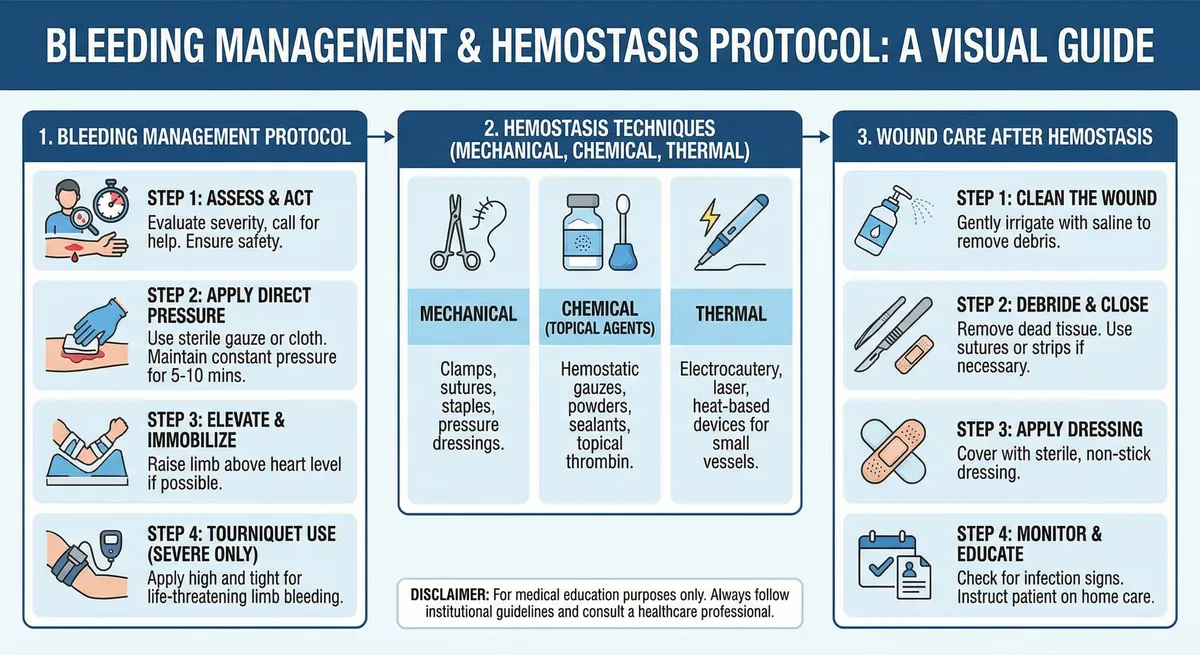
- Sangrado excesivo: Presión, nitrato de plata, trombina tópica, sutura si refractario
- Síncope vasovagal: Posición de Trendelenburg, monitorear signos vitales
Recursos relacionados
Protocolos clínicos
Protocolos clínicos paso a paso para la aplicación de sanguijuelas.
Seguridad y control de infecciones
Profilaxis de Aeromonas y OSHA.
Algoritmos de complicaciones
Árboles de decisión para complicaciones.
Clinical Knowledge Support
Tier A/B/C evidence framework — supports nurse-led monitoring and escalation thresholds.