FDA-freigegebene Indikation
Stufe A — FDA 510(k)-Cleared. Medicinal Blutegel (Hirudo medicinalis und H. verbana) sind FDA-freigegeben via 510(k) — ursprünglich clearance K040187, June 21, 2004 — as Unclassified Pre-Amendment devices (FDA product code NRN) für management of venöse Stauung in Gewebe flaps und Replantation surgery. Dies ist the nur FDA-freigegebene Indikation für medicinal Blutegel in der United States.
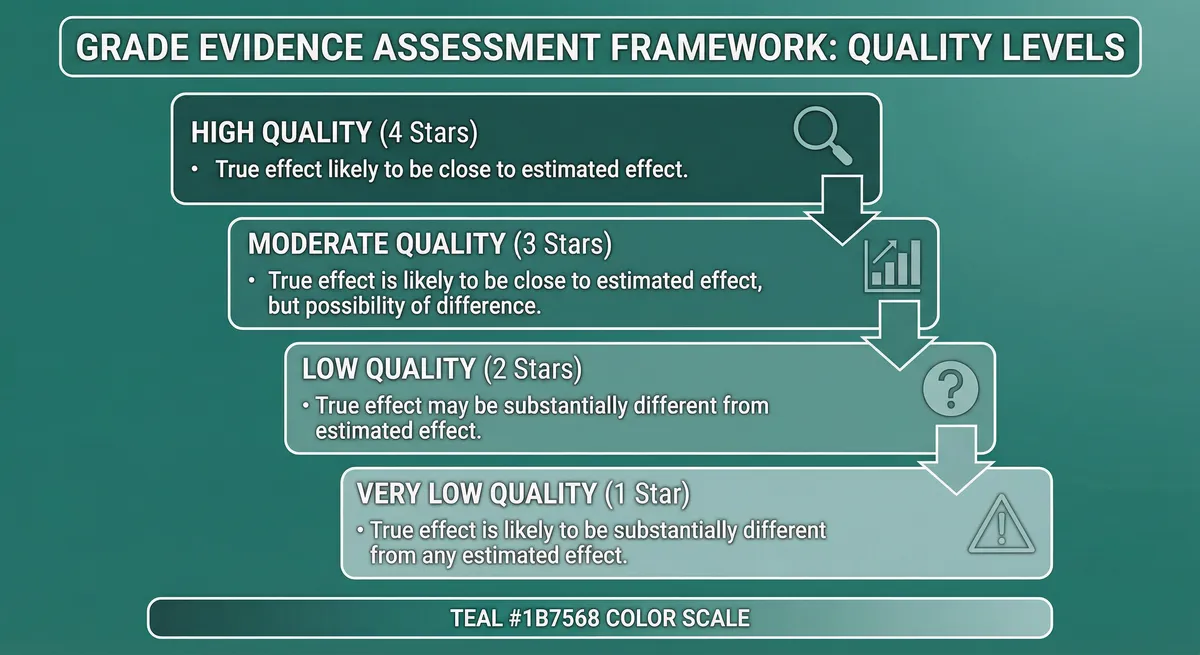
GRADE-Evidenzniveau: Hoch
Konsistente Ergebnisse aus gut konzipierten RCTs oder überwältigende Beobachtungsevidenz
FDA-510(k)-Freigaben: Drei Lieferanten mit FDA-510(k)-Freigabe
Die FDA hat medizinische Blutegel durch drei separate 510(k)-Einreichungen zugelassen und damit eine regulatorische Grundlage für den klinischen Einsatz in der rekonstruktiven Mikrochirurgie geschaffen. Alle drei Zulassungen gelten für dieselbe Indikation: die Behandlung venöser Stauung zur Verbesserung der Durchblutung in transplantiertem oder gefährdetem Gewebe nach einer Operation.
K040187 — Ricarimpex SAS
Zugelassen: 21. Juni 2004 · CBER-Tracking: BK251211
Produkt: Hirudo medicinalis
Die ursprüngliche 510(k)-Freigabe. Ricarimpex SAS (Eysines, Frankreich) ist einer von drei FDA-510(k)-zugelassenen Lieferanten für den US-Markt.
K132958 — Biopharm UK Ltd.
Zugelassen: 19. Februar 2014 · CBER-Tracking: BK251217
Produkt: Hirudo verbana
Zweite 510(k)-Freigabe. Biopharm UK Ltd. (Swansea, Wales) züchtet H. verbana, die in den meisten modernen klinischen Studien verwendete Art.
K140907 — Carolina Biological Supply Co.
Cleared: August 7, 2015 · CBER tracking: BK251218
Product: Hirudo verbana
Third 510(k)-Freigabe. Carolina Biological Supply Company (Burlington, NC) bietet an zusätzlich US-based supply option.
CBER-Zuständigkeitsübertragung (30. Dezember 2024)
Definitive klinische Evidenz
Die Evidenzbasis für medizinische Blutegel in der rekonstruktiven Mikrochirurgie besteht aus 4 systematischen Übersichtsarbeiten, mehreren großen retrospektiven Studien und jahrzehntelanger konsistenter klinischer Erfahrung an akademischen medizinischen Zentren weltweit. Große randomisierte kontrollierte Studien im Rahmen der akuten Lappenrettung sind ethisch und praktisch schwierig durchzuführen — die Intervention ist zeitkritisch und der Vergleichsarm bedeutet den Verlust von vitalem Gewebe —, sodass die Evidenzbasis in erster Linie auf systematischen Übersichtsarbeiten sowie prospektiven und retrospektiven Kohortenreihen beruht. Innerhalb dieser Einschränkungen kommen unabhängige systematische Übersichtsarbeiten zu einem konsistenten Wirksamkeitsprofil.
| Studie | Design | Population (n=) | Intervention | Primäres Outcome | Ergebnis |
|---|---|---|---|---|---|
| Whitaker et al. 2012 | Systematische Übersichtsarbeit | Alle Fälle plastischer/rekonstruktiver Chirurgie mit venöser Stauung (67 Publikationen, 1966-2009) (n=277) | Medizinische Blutegeltherapie zur Lappenrettung und Gewebereplantation | Insgesamt Gewebe Rettungsrate; complication profile | 78 % Rettungsrate (216/277); 88,3 % ohne Infektion vs. 37,4 % mit Infektion; 49,75 % Transfusionsrate Wegweisende systematische Übersichtsarbeit. 14,4 % Gesamt-Infektionsrate; 21,8 % Komplikationsrate. Etablierte den maßgeblichen Referenzwert für die Rettungsrate. |
| Cornejo et al. 2017 | Retrospektive Kohorte | Patienten, die nach mikrochirurgischer Rekonstruktion an einem einzigen akademischen Zentrum eine Blutegeltherapie benötigten (n=87) | Medicinal Blutegeltherapie; Durchschnitt 74.4 Blutegel per Patient über Behandlungsverlauf | Gewebe Rettungsrate; Blutegel Verwendung; complications | 60.9% insgesamt success Rate; 55% Transfusion Rate; 13.8% Infektionsrate Größte monozentrische retrospektive Studie. Dokumentierte die detailliertesten Daten zum Blutegeleinsatz: durchschnittlich 74,4 Blutegel/Patient und lieferte damit entscheidende Daten zur Kosteneffektivität. |
| Herlin et al. 2017 | Systematische Übersichtsarbeit + retrospektive Kohorte | Free flap Patienten mit venöse Stauung (41 Studien reviewed + own 43-Patient series) (n=41 Studien) | Medizinische Blutegel mit Ciprofloxacin- + TMP-SMX-Prophylaxe | Lappenrettungsrate stratifiziert nach Zeitpunkt der Intervention | 83.7% Rettung innerhalb 24h; 38.6% wenn delayed beyond 24h Etablierte das kritische 24-Stunden-Zeitfenster. 45 Prozentpunkte Rückgang bei verzögerter Therapie. Empfohlen wurde cipro + TMP-SMX als First-Line-Prophylaxe. |
| Kuhn et al. 2019 | Comprehensive review | Alle plastic und reconstructive surgery flap Patienten (n=n. a.) | Medizinische Blutegeltherapie als Standardversorgung zur venösen Dekompression | Bestätigung der Rettungsrate; Positionierung als Standardversorgung | 78 % Rettung bestätigt; Blutegeltherapie positioniert als Standardversorgung, wenn die chirurgische Revision fehlschlägt Veröffentlicht in Plastic and Reconstructive Surgery — Global Open. Bestätigte den Whitaker-2012-Benchmark. |
| Smolle et al. 2024 | Systematische Übersichtsarbeit | Brust reconstruction Patienten; 18 Studien (4 Fallserie, 14 Fall reports); 28 Patienten (n=28) | Medizinische Blutegeltherapie bei Lappenstauung; im Median 2 Blutegel/Sitzung, 3 Sitzungen/Tag, 3 Tage | Gewebe Rettungsrate; complication burden | 75% Rettung; 81% Komplikationsrate (infection und anemia dominant) First systematische Übersichtsarbeit dedicated to Brust surgery. Concluded judiciously verwendet gegeben hoch complication burden. |
Warum keine randomisierten kontrollierten Studien existieren
Mikrochirurgische Anwendungen: Rettungsraten nach Indikation
Medizinische Blutegel werden im gesamten Spektrum der rekonstruktiven Mikrochirurgie überall dort eingesetzt, wo eine venöse Stauung die Gewebevitalität bedroht. Jede Anwendung fällt in die FDA-510(k)-zugelassene Indikation zum Management der venösen Stauung bei kompromittierten Gewebelappen und Replantationen.
Finger-Replantation
68–83%
Rettungsrate
Häufigste Indikation. Eine venöse Anastomose ist bei distalen Amputationen (Zone I/II) oft unmöglich, wodurch Blutegel zum primären venösen Abflussmechanismus werden. Soucacos 1994: 83 % Rettung in 29 Replantationsfällen.
Ohr-Replantation
70–87%
Rettungsrate
Die Ohrmuschel besitzt keine zuverlässigen Venen für eine mikrochirurgische Anastomose. Blutegel sind häufig die einzige praktikable Methode zur venösen Dekompression. Insgesamt wurden in der Literatur über 84 Fälle berichtet.
Lippen- & Nasen-Replantation
75–85%
Rettungsrate
Die Replantation fazialer Untereinheiten ist bei der venösen Dekompression auf die Blutegeltherapie angewiesen. Kleinkalibrige Venen machen die mikrochirurgische venöse Rekonstruktion unzuverlässig. Eine Serie der Universität Hamburg dokumentierte konsistente Erfolge.
Brustrekonstruktion (DIEP/TRAM)
75%
Rettungsrate (Smolle 2024)
Höhere Komplikationsrate (81 %) aufgrund des großen Lappenvolumens, das mehr Blutegel und eine längere Behandlungsdauer erfordert. Eine ergänzende venöse Anastomose kann bei DIEP-Lappen überlegene Ergebnisse bieten.
Freie Lappen (allgemein)
78–84%
Rettungsrate
Standardversorgung, wenn postoperativ eine venöse Thrombose oder Stauung auftritt und eine chirurgische Revision nicht durchführbar ist oder fehlgeschlagen ist. 83,7 % Rettung, wenn innerhalb von 24 Stunden begonnen wird (Herlin 2017).
Gestielte Lappen
78%
Rettungsrate
Venöse Stauung in pedicled flaps (e.g., pectoralis major, latissimus dorsi) responds well to Blutegeltherapie. Untere complication burden than freie Lappen due to shorter Behandlungsverlaufs.
Das kritische 24-Stunden-Zeitfenster
Der Zeitpunkt entscheidet über das Ergebnis
Innerhalb von 24 Stunden
83.7%
Lappenrettungsrate
Rasches Erkennen und sofortige Blutegelanwendung. Die meisten akademischen Zentren verfügen über Pflegeprotokolle für einen sofortigen Beginn bei klinischem Nachweis einer venösen Stauung (dunkelviolette Färbung, pralles Gewebe, rasch austretendes dunkles Blut bei Nadelstich).
Nach mehr als 24 Stunden
38.6%
Lappenrettungsrate
Ein verzögerter Beginn führt zu einem Rückgang der Rettung um 45 Prozentpunkte. Irreversible Gewebeschäden durch anhaltende venöse Hypertonie, interstitielles Ödem und thrombotische Ausbreitung verringern die Behandlungswirksamkeit.
Klinische Implikationen für Krankenhausprotokolle
Die 24-Stunden-Zeitdaten machen es erforderlich, dass Einrichtungen rund um die Uhr die Verfügbarkeit von Blutegeln gewährleisten. In das EMR integrierte Order-Sets sollten eine sofortige Blutegelanwendung innerhalb von 30 Minuten nach klinischem Nachweis ermöglichen. Die Verfügbarkeit nachts und an Wochenenden ist entscheidend — eine venöse Stauung richtet sich nicht nach den Geschäftszeiten. Anwendungshäufigkeit: alle 2–8 Stunden; Behandlungsdauer: 4–10 Tage (im Median 3–5 Tage).
Klinische Anwendung: Große US-Universitätskliniken
Medizinische Blutegel werden von Abteilungen für plastische und rekonstruktive Chirurgie an großen akademischen medizinischen Zentren in den gesamten Vereinigten Staaten routinemäßig vorgehalten und eingesetzt. Die folgenden Einrichtungen haben institutionelle Protokolle oder Fallserien veröffentlicht oder unterhalten bekanntermaßen aktive Blutegeltherapieprogramme.
| Institution | Department(s) | Primary Applications |
|---|---|---|
| Johns Hopkins Hospital | Plastic Surgery, Otolaryngology | Free Lappenrettung, Finger Replantation, Ohr reconstruction |
| Cleveland Clinic | Plastic Surgery, Hand Surgery | Mikrochirurgisch Lappenrettung, Finger Replantation |
| Duke University Medical Center | Plastic & Reconstructive Surgery | Free flap monitoring, Brust reconstruction Rettung |
| Baylor College of Medicine | Plastic Surgery, Hand & Mikrochirurgie | Finger Replantation, free Gewebe transfer |
| Tampa Allgemein Hospital / USF | Plastic Surgery | Free Lappenrettung, published institutionell protocol |
| Stanford University Medical Center | Plastic & Reconstructive Surgery | Mikrochirurgisch reconstruction, Brust reconstruction |
| Massachusetts Allgemein Hospital | Plastic Surgery, Orthopaedic Hand Service | Replantation, free Lappenrettung, composite Gewebe |
US-Lieferkette für Blutegel
Institutionelles Protokoll: Parameter des Versorgungsstandards
Die folgenden Protokollparameter geben die Konsenspraxis an akademischen medizinischen Zentren der USA wieder, zusammengeführt aus veröffentlichten institutionellen Protokollen, systematischen Übersichtsarbeiten und Praxismustern von Experten.
| Parameter | Standard Protocol | Notes |
|---|---|---|
| Blutegel count per application | 1–6 Blutegel per session | Typischerweise 2–3 bei Finger/Ohr; 4–6 bei großen freien Lappen; titriert nach Lappengröße und Schweregrad der Stauung |
| Application frequency | Jede 2–8 Stunden | Jede 2–4 Stunden anfänglich; extend to jede 6–8 Stunden as congestion verbessert; continuous assessment guides frequency |
| Behandlungsdauer | 3–10 Tage (Median 4–5 Tage) | Fortsetzen, bis der venöse Abfluss wiederhergestellt ist (stabile Farbe, normale Kapillarfüllung, keine Stauung über 12–24 Stunden ohne Blutegel) |
| Durchschnitt Blutegel per course | 74.4 Blutegel/Patient (Cornejo 2017) | Range: 10–200+ depending on flap size und Dauer; Brust reconstruction courses tend to sein longer |
| Antibiotikum prophylaxis | Ciprofloxacin 500mg PO BID + TMP-SMX DS PO BID | Beginnen Sie vor der ersten Blutegelanwendung; setzen Sie die Anwendung 24–48 Stunden nach der letzten Anwendung fort. Da über ciprofloxacinresistente Aeromonas nach Blutegeltherapie berichtet wurde, kann eine Ciprofloxacin‑Monotherapie unzuverlässig sein; eine Kombinationsprophylaxe (Zugabe von Trimethoprim‑Sulfamethoxazol) wird häufig empfohlen. |
| Hematologic monitoring | CBC jede 4–8 Stunden während active Behandlung | pRBC transfundieren, falls Hgb <7 g/dL (<8 g/dL bei kardialer Komorbidität); 2 kreuzprobengetestete Einheiten bereithalten und verfügbar halten |
| EMR order set components | Blutegelanwendung, Antibiotikum prophylaxis, CBC frequency, Transfusion thresholds, flap monitoring schedule | Standardized order sets reduce medication errors und ensure protocol compliance; sollte einschließen nursing education materials |
EMR-integrierte Order Sets
Kosten-Wirksamkeits-Analyse
Die Blutegeltherapie ist im Verhältnis zu den chirurgischen Eingriffen, die sie rettet, kosteneffektiv. Die direkten Kosten der Blutegel machen nur einen kleinen Bruchteil der Gesamtkosten einer mikrochirurgischen Rekonstruktion aus, und eine erfolgreiche Rettung vermeidet die weitaus höheren Kosten eines Lappenversagens, einer erneuten Operation und einer verlängerten Krankenhausbehandlung.
$10–30
Cost per Blutegel
74.4
Durchschnitt Blutegel per Patient (Cornejo 2017)
$750–2,200
Total Blutegel cost per Behandlungsverlauf
1–3 Tage
Cost-wirksam Behandlungsdauer
| Studie | Design | Population (n=) | Intervention | Primäres Outcome | Ergebnis |
|---|---|---|---|---|---|
| Cornejo et al. 2017 | Retrospektive Kostenanalyse | 87 Patienten requiring Blutegeltherapie nach mikrochirurgische Rekonstruktion (n=87) | Medicinal Blutegeltherapie; avg 74.4 Blutegel/Patient | Direkte Kosten der Blutegeltherapie im Vergleich zu den Kosten eines Lappenversagens und einer erneuten Operation | $750–$2,200 allein für die Blutegel; durchschnittlich 3–5 Tage zusätzlicher Krankenhausaufenthalt; Transfusionskosten kommen hinzu Die direkten Blutegelkosten betragen <5% der Gesamtkosten des mikrochirurgischen Eingriffs ($15,000–$50,000+). Ein Lappenversagen, das eine erneute Operation erfordert, kostet zusätzlich $25,000–$75,000. |
Der ökonomische Nutzen der Blutegeltherapie
Alternative Methoden der venösen Dekompression
Obwohl medizinische Blutegel der Behandlungsstandard bleiben, existieren mehrere alternative Ansätze zur venösen Dekompression. Keiner hat in klinischen Studien eine gleichwertige Wirksamkeit gezeigt, und keiner hat für diese Indikation eine FDA-Freigabe erlangt.
| Method | Mechanism | Salvage Rate | Limitations |
|---|---|---|---|
| Medizinische Blutegel (Behandlungsstandard) | Kombinierte mechanische Blutentnahme + pharmakologische Antikoagulation (hirudin, calin, destabilase), die 24–48h anhaltende Blutung bereitstellt | 78% (Whitaker 2012) | Aeromonas infection risk (14.4%); Transfusion requirements (50%); Patient/staff aversion |
| Heparin pledgets / chemical Blutegel | Topisch heparin-soaked gauze applied to scarified Gewebe; lokal Antikoagulation Wirkung nur | Limited data; geschätzt 40–60% | Keine pharmakologische Synergie; erfordert wiederholte Skarifikation; weniger wirksam bei tiefer Gewebestauung |
| Mechanical leeching devices | Saugbasierte Geräte, die einen Unterdruck zur Blutentnahme erzeugen; keine pharmakologische Komponente | Insufficient clinical data | Keine antikoagulierende Wirkung; keine anhaltende Blutung nach der Anwendung; Prototypstadium; keine FDA-Freigabe |
| Surgical venös revision | Mikrochirurgische Re-Anastomose thrombosierter oder abgeknickter Venen; behebt die Grundursache, sofern technisch durchführbar | Variable; depends on cause | Nicht always technically feasible; kann damage adjacent structures; failure leads to Blutegeltherapie as rescue |
Sicherheitsaspekte und Komplikationsmanagement
The Primär Complication: <em>Aeromonas hydrophila</em>
Infection Rate
14.4%
Insgesamt (Whitaker 2012)
Without prophylaxis: 7–20%. With Ciprofloxacin + TMP-SMX prophylaxis: <2%. Nguyen et al. (2012) berichtet 0% Infektionsrate (0/39) with standardized prophylaxis.
Transfusionsrate
50%
Im chirurgischen Umfeld
49,75% der Patienten benötigten eine Bluttransfusion (Whitaker 2012). Jeder Blutegel entnimmt 5–15 mL Blut, mit zusätzlichen 50–150 mL durch das Nachbluten nach dem Ablösen über 24–48 Stunden. Multipliziert mit durchschnittlich 74,4 Blutegeln pro Behandlungszyklus.
Blutungsmanagement
CBC q4–8h
Während der aktiven Behandlung
Hämoglobin >7 g/dL halten (>8 g/dL bei kardialer Komorbidität). 2 Einheiten pRBC kreuzprobengetestet und verfügbar halten. Aggressive intravenöse Hydratation zum Ausgleich des Blutverlusts. Tägliche Überwachung des Gerinnungsstatus.
Antibiotikaprophylaxe: Standard mit zwei Wirkstoffen
Verwandte Evidenz und Ressourcen
Diese zentrale Seite bietet einen detaillierten Überblick über die FDA-freigegebene Indikation. Für ausführliche Ergebnisdaten, Protokolle zum Infektionsmanagement und fachgebietsspezifische Evidenz siehe die folgenden Seiten.
Verwandte Ressourcen
Mikrochirurgie Outcomes
Detaillierte Ergebnisdaten einschließlich Evidenztabellen für Finger-, Ohr- und Brustreplantation sowie Protokolle zum Aeromonas-Management
Surgery — Clinical Specialties
FDA-freigegebene mikrochirurgische Anwendungen neben Off-Label-Evidenz aus der allgemeinen Gefäßchirurgie
Safety & Infection Control
Comprehensive Aeromonas Management, Antibiotikum prophylaxis, und institutionell safety protocols
Regulatory Status USA
Vollständige regulatorische Historie, 510(k)-Details, CBER-Übertragung und bundesstaatlicher Tätigkeitsumfang
FDA 510(k) Tief Dive
Umfassende Analyse aller drei FDA-510(k)-Freigaben, der Historie des Prädikatsgeräts und des Rahmens für die Off-Label-Anwendung