Patient FAQs
60+ patient questions answered with evidence-based, plain-language responses — everything you need to know about medicinal leech therapy as a patient or caregiver
Last updated: June 18, 2026
Questions From Real Patients, Answered With Real Evidence
This is the most-comprehensive patient FAQ resource for medicinal leech therapy in the U.S. It draws from questions submitted by patients to the ASH editorial team, common questions encountered in clinical practice, and standard concerns documented in the patient-experience literature. Every answer is anchored in primary evidence — RCTs, FDA records, safety surveillance data, or established clinical guidelines.
If your question isn't here, please contact us — we add new questions monthly. This page is a living document of patient-relevant evidence.
Important: This page provides general educational information. It is not medical advice. Hirudotherapy is FDA-cleared for venous congestion in microsurgical flaps, grafts, and replants under K040187 / K132958 / K140907. Other uses (e.g., knee osteoarthritis, varicose veins, migraine) are off-label — legal but not part of FDA-cleared indications. Always consult a licensed physician about your specific medical situation.
63 questions across 10 categories
The Basics
What is hirudotherapy and how does it work?
Q01What is hirudotherapy?
Hirudotherapy is the controlled medical use of Hirudo medicinalis (the medicinal leech) for treatment of specific conditions. The U.S. Food and Drug Administration (FDA) classifies medicinal leeches as a medical device and has cleared their use since 2004 for venous congestion in microsurgical flaps, grafts, and replants. Beyond this FDA-cleared indication, hirudotherapy is used off-label for several conditions where supporting evidence ranges from strong (knee osteoarthritis, 6 RCTs) to investigational (migraine, hypertension).
Evidence: Tier A (FDA-cleared) for venous congestion; Tier B (off-label) for OA
Q02How does a leech treatment actually work in my body?
When a leech attaches to skin (typically held in place with a small medical apparatus), three things happen simultaneously: (1) Mechanical bloodletting — the leech removes 5–15 mL of blood during its 20–60 minute feeding session. (2) Anticoagulant delivery — the leech secretes saliva containing hirudin (the most potent natural thrombin inhibitor known), calin, destabilase, and many other proteins (189 identified in H. medicinalis by mass spectrometry). (3) Post-detachment bleeding — for 4–24 hours after the leech detaches, the bite site oozes an additional 50–150 mL of blood due to the residual anticoagulant effect. The combination produces local decompression of congested tissue and may have systemic anti-inflammatory and microcirculatory effects.
Evidence: Established mechanism, Babenko et al. 2020 + Markwardt 1957
Q03Are the leeches sterile? Where do they come from?
The U.S. has three FDA-cleared medicinal leech suppliers: Ricarimpex SAS (Eysines, France — 150+ years of continuous medicinal leech aquaculture, FDA 510(k) K040187), Biopharm UK Ltd. (Hendy, Wales — FDA 510(k) K132958), and Carolina Biological Supply Co. (Burlington, NC — FDA 510(k) K140907). Each operates pharmaceutical-grade aquaculture with controlled environment, water quality monitoring, batch traceability, and antimicrobial surveillance. Leeches are NOT sterile — they carry Aeromonas veronii as a normal gut symbiont, which is why antibiotic prophylaxis is mandatory before treatment.
Evidence: FDA AccessData K040187, K132958, K140907
Q04Is each leech used only once?
Yes, absolutely. Each leech is used on exactly one patient, then humanely euthanized in 70% ethyl alcohol after the session. This is a strict FDA requirement and OSHA Bloodborne Pathogen Standard requirement. Re-use is illegal and dangerous — it would risk cross-contamination of patient blood. If you encounter a practitioner who suggests re-using leeches, this is a critical safety violation; report it to your state medical board.
Evidence: FDA labeling + OSHA standards
Q05How big is a medicinal leech?
An unfed adult medicinal leech is about 5–8 cm (2–3 inches) long. After feeding, the leech swells to about 10–15 cm and increases in weight up to 10× as it consumes blood. The species used in U.S. clinical practice (technically Hirudo verbana for most commercial supplies, despite the FDA labeling that says H. medicinalis) is brown-and-green colored with characteristic dorsal stripes.
Evidence: Standard anatomy, Sawyer 1986
The Procedure Experience
What does it actually feel like? What will I see?
Q06Does the leech bite hurt?
Most patients describe the bite as mild — comparable to a mosquito bite or a small pinprick. The discomfort lasts only the first few minutes; once the leech is attached and feeding, it's generally not painful. The leech's saliva contains substances that have mild local anesthetic-like effects. This is a documented patient-experience pattern across published RCTs and case series.
Evidence: Patient-experience literature, Michalsen 2003 + Andereya 2008
Q07How long does a leech session last?
Feeding itself takes 20–60 minutes per leech. The actual clinical session including preparation, multiple leech applications (typically 2–6 leeches per session), and initial monitoring takes 1.5–3 hours. For microsurgical flap salvage in hospital settings, leech application may be ongoing for several days with sessions every 4–8 hours.
Evidence: Standard clinical practice
Q08What happens after the leech detaches?
After 20–60 minutes of feeding, the leech detaches spontaneously when full. The bite site continues to ooze blood for 4–24 hours — this is intentional and therapeutic, not a complication. Total blood loss per leech (feeding + post-detachment) is typically 55–165 mL. The bite site will require absorbent dressings; some bleeding through clothes overnight is normal. Within 1–2 weeks the wound closes; the characteristic triradiate (Y-shaped) scar fades over 6–12 months but may remain faintly visible long-term.
Evidence: Whitaker 2012 + standard clinical practice
Q09Will I be awake during the procedure?
For outpatient applications (knee OA, varicose veins, joint pain), yes — you will be awake and conscious. The application is comfortable; many patients read or watch their phone. For microsurgical post-operative applications (flap salvage), you are typically in a hospital bed recovering from surgery; the procedure is done bedside. Sedation is not typically required.
Evidence: Standard clinical practice
Q10Can I drive home after a leech treatment?
Yes, in most outpatient settings. Hirudotherapy itself does not affect cognition, balance, or reflexes. The main caution: if you've had multiple leeches with significant blood loss, you may feel mildly lightheaded — wait 30–60 minutes before driving and have water/light food before leaving. Many practitioners recommend a companion drive you home from your first session as a precaution.
Evidence: Standard outpatient practice
Q11What does the bite site look like afterward?
Initial appearance: small Y-shaped (triradiate) wound, slight redness around the site, often a small bruise. The site may appear pink or slightly red for several days. Itching is common (37–75% of patients) due to histamine in the leech's saliva — this is normal and resolves in 2–4 days. The characteristic triradiate scar (about 2–5 mm) gradually fades over 6–12 months but may be permanently visible as a faint mark.
Evidence: Standard documented patient experience
Safety & Risks
Are leeches safe? What are the real risks?
Q12What is the main safety risk I should know about?
The most important risk is Aeromonas infection. Medicinal leeches carry Aeromonas veronii and A. hydrophila as natural gut bacteria. Without antibiotic prophylaxis, infection rates are 7–20% across published clinical series; with proper antibiotic prophylaxis, rates drop to <5%. This is why every reputable practitioner will prescribe antibiotics before your first leech session. If a practitioner offers leech therapy without antibiotic prophylaxis, this is a red flag — find a different provider.
Evidence: Mumcuoglu 2014 + Whitaker 2012 + Nguyen 2012
Q13Which antibiotics will I need? For how long?
Standard first-line prophylaxis is ciprofloxacin 500 mg twice daily PLUS trimethoprim-sulfamethoxazole DS twice daily. The dual-agent approach addresses growing ciprofloxacin resistance in Aeromonas strains. Antibiotics start before your first leech application and continue throughout the treatment course plus a minimum of 24 hours after the last leech. For immunocompromised patients (transplant recipients, biologics, chemotherapy), extended duration of 10–14 days is recommended.
Evidence: Mumcuoglu 2014 + Herlin 2017
Q14How much blood will I lose?
Per leech: 5–15 mL during feeding + 50–150 mL during post-detachment bleeding = total 55–165 mL per leech. For multiple-leech sessions (4 leeches typical for knee OA): about 220–660 mL total. This is comparable to or less than a blood donation (450 mL). In microsurgical hospital settings with prolonged leech therapy, total blood loss can be significant — about 50% of microsurgical patients receive transfusion support. For outpatient OA sessions, transfusion is essentially never needed.
Evidence: misc.json mechanical table + Whitaker 2012
Q15Can leech therapy cause an allergic reaction?
Mild local reactions are common — itching, redness, and swelling near the bite site occur in 37–75% of patients due to histamine in leech saliva. These are NOT allergies and are not concerning. True IgE-mediated anaphylaxis is rare but documented; symptoms would include hives over the whole body, swelling of face/tongue/throat, difficulty breathing, dizziness, or low blood pressure. Anaphylaxis is an absolute contraindication to future leech therapy. Your practitioner should have epinephrine auto-injectors immediately available.
Evidence: Standard allergy literature + safety-protocols
Q16Are there conditions where I absolutely should not have leech therapy?
Absolute contraindications include: Hemophilia or other inherited bleeding disorders; severe anemia (hemoglobin <8 g/dL); active septicemia; documented prior anaphylaxis to leech saliva; active leukemia/lymphoma or other hematologic malignancies; decompensated liver disease with coagulopathy; severe peripheral arterial disease at the application site. Active anticoagulation (warfarin, DOACs, heparin) is generally an absolute contraindication for outpatient use; in microsurgical hospital settings, concomitant anticoagulation is sometimes managed with team coordination.
Evidence: Safety-protocols absoluteContraindications
Q17Are leeches contaminated with hepatitis or HIV?
Medicinal leeches from FDA-cleared suppliers are bred in controlled aquaculture; they have never fed on previous humans (this is a strict FDA requirement). Transmission of bloodborne pathogens like HIV or hepatitis from medical leeches is biologically implausible because: (1) leeches do not feed on infected human blood before clinical use, (2) leeches are used once and destroyed. The main microbial risk is the leech's own gut bacteria (Aeromonas), addressed by antibiotic prophylaxis. There are no documented cases of HIV or viral hepatitis transmission from medicinal leech therapy.
Evidence: FDA labeling + 30+ year clinical surveillance
Q18What if I take aspirin or NSAIDs?
Aspirin and NSAIDs (ibuprofen, naproxen) are relative contraindications — they increase post-detachment bleeding duration and intensity. Most practitioners recommend stopping aspirin for 7–10 days and NSAIDs for 3–5 days before elective leech therapy. In urgent/emergent surgical contexts, leech therapy may proceed with these medications continuing under enhanced monitoring. Discuss your specific medications with your physician.
Evidence: Standard pre-procedure protocols
Q19Can I have leech therapy if I'm pregnant?
Pregnancy is treated as a relative-to-absolute contraindication in the U.S. due to absent controlled studies. Theoretical concerns include hirudin's potential placental transfer (small molecular weight, ~7 kDa), bleeding risk affecting maternal blood volume, and uncertain fetal effects. Most U.S. practitioners decline elective hirudotherapy during pregnancy. If you become pregnant during an ongoing course of treatment, contact your physician immediately.
Evidence: Absence of safety data, practice convention
Q20Can children receive hirudotherapy?
Children CAN receive medicinal leech therapy when clinically indicated, most commonly for microsurgical post-operative care (digit replantation, ear reconstruction). Pediatric protocols use weight-based antibiotic dosing (e.g., ciprofloxacin 15 mg/kg BID, max adult dose) and reduced leech counts. Anesthesia/sedation is often used in younger children to facilitate procedural compliance. Off-label pediatric use for outpatient conditions (e.g., joint pain) is much rarer.
Evidence: Pediatric microsurgery practice
Conditions Treated
What conditions can hirudotherapy actually help with?
Q21What conditions is leech therapy FDA-cleared to treat?
The single FDA-cleared indication is venous congestion in microsurgical flaps, grafts, and replants — this is the after-surgical use to save tissue when veins fail to drain properly. Examples: replantation of severed fingers, ear or scalp reconstruction, breast reconstruction with free flaps. K040187, K132958, and K140907 all share this same indication language.
Evidence: Tier A FDA-cleared, K040187
Q22Does hirudotherapy actually work for knee osteoarthritis?
Yes, there is strong evidence (GRADE Moderate, Tier B off-label) supporting hirudotherapy for knee osteoarthritis. Six published RCTs show significant pain reduction. The Michalsen 2003 trial (n=51) showed 64% pain reduction with leech therapy vs. 18.5% with topical diclofenac at day 7, sustained at day 91. Andereya 2008 (n=113) showed leech therapy non-inferior to hyaluronic acid injection. Cohen's effect size d = 0.82 pooled across trials, comparable to intra-articular corticosteroid. This is off-label use — not part of FDA-cleared indications.
Evidence: Tier B off-label, GRADE Moderate
Q23How long does pain relief last after a single knee OA leech session?
In published RCTs, pain reduction from a single 4-leech knee OA session typically lasts 3–6 months. Michalsen 2003 documented sustained benefit at day 91 (p=0.002). Some patients report longer durability; some shorter. Repeat sessions can extend duration, though optimal repeat protocols are not yet established.
Evidence: Michalsen 2003 + Andereya 2008
Q24Does it work for varicose veins?
Hirudotherapy is investigationally used for varicose veins and chronic venous insufficiency, with case-series evidence but no published RCTs. Some patients report improvement in pain, heaviness, and skin discoloration. It is NOT a replacement for established varicose vein therapies — sclerotherapy, laser ablation, or surgical stripping have stronger evidence and longer track records. Hirudotherapy may complement, not replace, standard care.
Evidence: Tier C investigational
Q25Can it help my migraine or headache?
Migraine and chronic headache are conditions where hirudotherapy has a long historical tradition (particularly in Russian-tradition medicine) but no modern peer-reviewed RCT evidence. ASH categorizes these uses as Tier C investigational. Some patients report benefit; the mechanistic plausibility (anti-inflammatory effects, microcirculatory improvement) is reasonable. If you have migraine, please first pursue evidence-based therapies — triptans, CGRP inhibitors, prophylactic medications — before considering off-label hirudotherapy.
Evidence: Tier C investigational
Q26What about thumb base arthritis (CMC-1 OA)?
Two RCTs (Michalsen 2008 n=32, Andereya 2008 n=30) plus one controlled trial support hirudotherapy for CMC-1 (thumb base) osteoarthritis. Typical protocol: 2–3 leeches to the saddle joint plus optional acupoint LI-4. Reported VAS pain reduction approximately 55% from a single session. This is off-label use — strong evidence for a non-cleared indication.
Evidence: Tier B off-label
Q27Tennis elbow / lateral epicondylitis?
One RCT (Stange 2012, n=52) showed 59% VAS pain reduction with hirudotherapy for lateral epicondylitis. 2–4 leeches applied to the lateral epicondyle area. Off-label use with single RCT evidence (GRADE Moderate, Tier B). For first-line, conservative therapy (eccentric exercises, counterforce bracing) remains standard; hirudotherapy may be considered for refractory cases.
Evidence: Tier B off-label
Q28Can it help with post-surgical swelling or bruising?
This depends on the specific surgery. For microsurgical reconstructive procedures with venous congestion, hirudotherapy is FDA-cleared and well-established. For general post-surgical swelling or bruising in otherwise-healing tissues, the evidence is limited. Cosmetic surgery use of leeches for bruising/swelling is sometimes marketed but has weak supporting evidence.
Evidence: Mixed: Tier A for venous congestion; Tier C for general post-surgical
Q29Does it work for chronic venous ulcers?
Case series document benefit for chronic venous leg ulcers, particularly when conventional therapy (compression, wound care, sometimes pentoxifylline) has been inadequate. No published RCTs. The biological rationale (anti-inflammatory, anti-microbial, microcirculatory effects) is supported by leech salivary pharmacology, but clinical evidence remains investigational.
Evidence: Tier C investigational
Q30Can hirudotherapy be combined with my regular medications?
Many medications are compatible. Specific concerns: Anticoagulants and antiplatelets (warfarin, DOACs, aspirin, clopidogrel) increase bleeding — usually requires medication adjustment. Immunosuppressants (steroids, biologics, chemotherapy) require extended antibiotic prophylaxis. NSAIDs increase bleeding — typically held 3–5 days before. Antibiotics already in use may require coordination with the prophylaxis regimen. Bring a complete medication list to your appointment.
Evidence: Standard drug-interaction review
Practical Questions
Finding a practitioner, cost, insurance, scheduling
Q31How do I find a qualified hirudotherapy practitioner?
Look for these qualifications: (1) Licensed medical professional (MD, DO, ND with appropriate scope) or RN/APRN working under physician supervision; (2) Documented training in hirudotherapy protocols including infection control; (3) Uses FDA-cleared leech suppliers (Ricarimpex, Biopharm UK, or Carolina Biological); (4) Prescribes antibiotic prophylaxis before treatment; (5) Has emergency anaphylaxis medications available. For microsurgical applications: look for ASRM (American Society for Reconstructive Microsurgery) membership of the surgeon. ASH does not currently offer formal practitioner certification.
Evidence: Practice standard
Q32How much does hirudotherapy cost?
Leech cost per leech (current pricing): approximately $25–$30 per FDA-cleared medical leech. A typical outpatient knee OA session uses 4 leeches: ~$100–$120 leech cost + practitioner time + antibiotic prescription = total per session $300–$600 in the U.S. private-pay context. Microsurgical hospital protocols cost substantially more due to nursing intensity, hospital pharmacy markup, and prolonged duration — typically several thousand dollars over the treatment course, though usually within the broader hospital admission billing.
Evidence: Current market pricing
Q33Does insurance cover hirudotherapy?
FDA-cleared microsurgical applications (venous congestion in flaps/grafts/replants) are typically covered under the broader surgical admission and are not separately billed in most institutional contexts. Off-label outpatient applications (knee OA, varicose veins, etc.) are typically NOT covered by Medicare, Medicaid, or commercial insurance. Patients seeking hirudotherapy for off-label indications generally pay out-of-pocket. There is no specific CPT code for hirudotherapy currently; HCPCS C-codes may apply in hospital outpatient settings.
Evidence: Standard U.S. insurance practice
Q34Is hirudotherapy legal in the United States?
Yes. Medicinal leeches are FDA-cleared as a medical device. Off-label use (for indications other than venous congestion in flaps/grafts/replants) is legal under U.S. medical practice — an estimated 21% of all U.S. prescriptions are off-label (Radley et al., Arch Intern Med 2006). State medical practice acts govern who can perform the procedure (physicians universally; nurses, physician assistants, and others under physician supervision). Confirm state-specific scope of practice with your state medical board.
Evidence: FDA + state regulatory framework
Q35Do I need a referral from my primary care doctor?
Referral requirements depend on your insurance plan and the clinical context. For private-pay outpatient hirudotherapy, no referral is typically required. For insurance-covered microsurgical applications, the broader surgical care includes hirudotherapy without separate referral. Best practice: discuss hirudotherapy with your primary care physician so they can document your medication history, contraindications, and coordinate antibiotic prophylaxis.
Evidence: Standard insurance practice
Q36How many sessions will I need?
Highly variable by condition. For microsurgical flap salvage: as long as venous congestion persists, typically 3–7 days of multiple-leech-per-session protocols. For knee OA: published RCT protocols used single sessions with sustained benefit 3–6 months. Many practitioners offer repeat sessions every 6–12 months. For tennis elbow: single session showed 59% pain reduction. For varicose veins, migraine, other investigational uses: protocols vary widely with limited evidence guidance.
Evidence: Standard clinical practice
Q37Can hirudotherapy be done at my home, or only in a clinic?
Hirudotherapy is performed exclusively in licensed medical settings — hospital, clinic, or accredited outpatient facility. Home application is NOT appropriate for several reasons: emergency anaphylaxis response requires medical staff and equipment; infection control protocols require trained personnel; antibiotic prophylaxis requires physician prescription; blood loss monitoring requires clinical judgment. If a service offers home hirudotherapy, this is a major red flag — find a licensed clinical facility.
Evidence: Practice standard + safety protocols
Aftercare & Follow-Up
What happens in the days and weeks after treatment?
Q38What do I do at home after my leech session?
Standard post-session care: (1) Continue antibiotic prophylaxis as prescribed; (2) Keep bite sites covered with absorbent dressings — change every 4–8 hours during active bleeding; (3) Expect continued oozing for 4–24 hours; (4) Avoid aspirin/NSAIDs unless your physician approves; (5) Monitor for signs of infection (increasing redness, warmth, pain, fever) and contact your physician immediately if these develop; (6) Light activity is fine; avoid heavy exercise for 24–48 hours; (7) Keep the area clean — gentle washing is permitted once active bleeding stops.
Evidence: Standard post-procedure protocol
Q39How long until I can shower or get the bite sites wet?
Once active bleeding has stopped (usually 24–48 hours post-session), gentle washing with soap and water is fine. Avoid soaking in baths, hot tubs, or swimming pools for the first 7–10 days. The wound should be kept clean and dry between washings.
Evidence: Standard wound care
Q40What are the warning signs that I should call my doctor?
Call your physician immediately if you experience: (1) Increasing redness, warmth, or pain at the bite site after 48 hours; (2) Pus or yellow/green drainage; (3) Fever >100.4°F (38°C); (4) Red streaks extending away from the bite site (cellulitis); (5) Severe ongoing bleeding that doesn't slow after 24 hours; (6) Signs of allergic reaction (full-body itching, swelling of face/tongue, difficulty breathing); (7) Severe lightheadedness, fainting, or weakness suggesting significant blood loss.
Evidence: Standard safety surveillance
Q41How long until the wound heals?
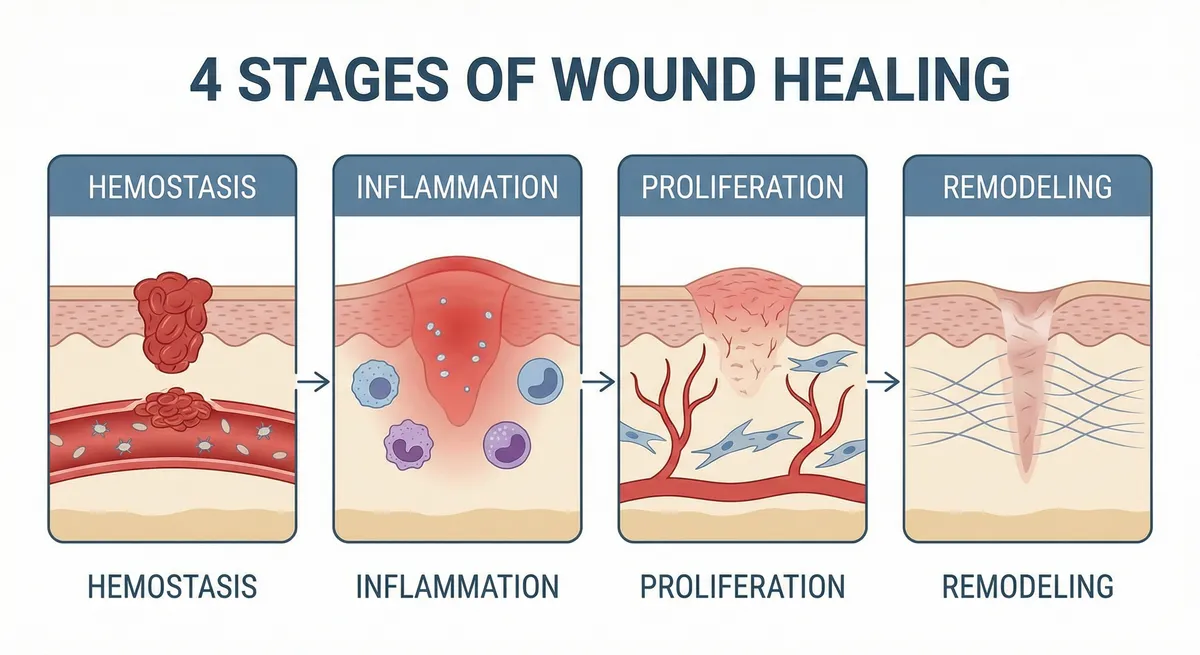
The visible wound typically closes within 1–2 weeks. The characteristic triradiate scar fades over 6–12 months but may remain faintly visible long-term. Skin pigmentation changes at the bite site (mild darkening or lightening) sometimes occur and are usually not permanent.
Evidence: Standard wound healing
Q42Will I have a permanent scar?
Triradiate (Y-shaped) scars from leech bites are typically 2–5 mm and fade over 6–12 months. Most patients have minimal visible scarring after 1 year. Patients with keloid tendency or hypertrophic scarring history may develop more visible scarring — discuss this with your physician before treatment. For cosmetically sensitive areas (face, visible body areas), consider this when consenting to treatment.
Evidence: Standard documented patient experience
Q43Can I exercise or play sports after treatment?
Light walking and gentle movement are fine immediately. Avoid vigorous exercise for 48 hours — this can dislodge clots forming at the bite site and prolong bleeding. Resume normal activity after bleeding has stopped (usually 24–48 hours). For knee OA treatments: gentle range-of-motion exercises starting 48 hours post-treatment may help maintain joint function.
Evidence: Standard post-procedure protocol
Q44When can I expect to feel improvement?
For microsurgical flap salvage: improvement in tissue color and capillary refill should be visible within hours; sustained tissue salvage assessed at 7 days. For knee OA: pain reduction typically begins 24–72 hours post-session, peaks at 1–2 weeks, sustained for 3–6 months. For tennis elbow: similar gradual onset over 1–2 weeks. Some patients report immediate relief; others have delayed response over weeks.
Evidence: RCT documented response patterns
The Psychological Side
Honest answers about the emotional experience
Q45I'm scared of leeches. Is this normal? Can I still do this?
Yes — fear or strong distaste for leeches is very common (the medical term is 'helminthophobia' or 'bdellophobia'). Many patients overcome this discomfort once they understand the controlled clinical setting and see the small medicinal leeches (very different from wild varieties). Some practitioners offer pre-treatment counseling, distraction techniques, or position the leech where the patient doesn't directly see it. If your phobia is severe enough that you cannot tolerate the application even with these supports, alternative therapies should be considered.
Evidence: Patient-experience literature
Q46Do I have to watch the leech feed?
No, absolutely not. Most patients choose not to watch. Practitioners typically cover the area with light gauze or position the application so you don't directly see the leech. You can read, watch your phone, or close your eyes during the session.
Evidence: Standard patient comfort practice
Q47Is there a stigma around using leech therapy?
Hirudotherapy has historical stigma from its 19th-century use, when bloodletting was overused and often inappropriate. Modern hirudotherapy is fundamentally different — narrow indications, evidence-based, FDA-cleared, antibiotic prophylaxis required. Some patients prefer not to discuss leech treatment with family or friends; this is a personal choice. The therapy is part of mainstream surgical care for microsurgical applications at major academic medical centers (Mayo Clinic, Cleveland Clinic, Johns Hopkins, etc.).
Evidence: Cultural/historical observation
Q48What if I change my mind during the session?
You can stop the procedure at any time. The leech can be carefully detached using salt, vinegar, or a similar method that causes the leech to release voluntarily without leaving its jaw embedded. Discuss your concerns with the practitioner — most patients who initially want to stop find they're able to continue once acclimated. Your consent is ongoing; you can withdraw it at any point.
Evidence: Standard informed consent practice
Specific Situations
Special considerations for unique circumstances
Q49I'm a vegan / vegetarian. Is leech therapy ethically permissible?
This is a personal values question. Medicinal leeches are euthanized after a single use (per FDA requirement). Some ethical frameworks consider this acceptable when the leech use saves human life or prevents major morbidity (e.g., flap salvage saving a replanted finger). Other ethical frameworks would object to any animal use. Vegan/vegetarian practitioners sometimes consider hirudotherapy permissible under necessity ethics; others reject it. ASH respects individual ethical choices and provides information to support informed decision-making.
Evidence: Ethics literature
Q50I have a religious objection to bloodletting or animal use. Is hirudotherapy compatible with my faith?
This depends on your specific religious tradition and personal interpretation. Some religious traditions (e.g., classical Islamic medicine — Hijama tradition; classical Ayurveda — Jalaukavacharana) have long-standing acceptance of medicinal leech therapy. Other traditions or individual interpretations may differ. Consult your religious community and physician together to make a personal decision aligned with your faith. ASH does not promote any particular religious position on this question.
Evidence: Religious-medical literature
Q51I'm a Jehovah's Witness — can I receive leech therapy without violating my faith?
This is a question for your specific congregation's Hospital Liaison Committee and your physician. Jehovah's Witness doctrine on blood products is nuanced and individual; some members accept fractionated blood products (which would parallel some aspects of leech-derived pharmacology). The blood removed by the leech is your own — not transfused or stored. Discuss your specific circumstances with your physician and faith community for an individualized determination.
Evidence: Religious-medical literature
Q52Can I have a leech treatment if I'm immunocompromised (HIV, transplant, biologics)?
Immunosuppression is a relative contraindication requiring careful risk-benefit assessment. Modified protocols apply: extended antibiotic prophylaxis (10–14 days), infectious disease consultation, enhanced wound surveillance. For microsurgical post-transplant applications, hirudotherapy is sometimes life-saving despite the elevated infection risk. For elective outpatient indications, many immunocompromised patients are advised against leech therapy because the risk-benefit balance is unfavorable.
Evidence: Modified prophylaxis protocols
Q53I have diabetes. Special considerations?
Diabetes is a relative contraindication due to elevated infection risk and impaired wound healing. Specific considerations: HbA1c should be <10% before elective treatment; ABI (ankle-brachial index) ≥0.7 for diabetic foot applications; mandatory antibiotic prophylaxis; enhanced wound monitoring; coordination with your endocrinologist. Diabetes does not absolutely prevent hirudotherapy but requires more rigorous safety precautions.
Evidence: Relative-contraindication protocol
Q54What about lupus, rheumatoid arthritis, or other autoimmune diseases?
Autoimmune diseases on biologic therapy or immunosuppressants are relative contraindications requiring extended antibiotic prophylaxis and coordination with your rheumatologist. Autoimmune diseases without immunosuppression are less restrictive. Active disease flares may complicate decision-making. The benefit of hirudotherapy for joint pain in autoimmune-related arthritis is not well-studied (most OA RCT evidence is for non-autoimmune osteoarthritis).
Evidence: Modified prophylaxis + relative contraindication
Q55Can the leech be reused on me for a second site or session?
NO. Each leech is used on exactly one patient and one session, then humanely euthanized in 70% ethyl alcohol. This is a strict FDA requirement. If a second site needs treatment in the same session, a fresh leech is used. If a follow-up session is scheduled, fresh leeches are used. Re-use is illegal and dangerous regardless of whether it's on the same or different patient.
Evidence: FDA regulatory requirement
About the Evidence
How do we know hirudotherapy actually works?
Q56How strong is the evidence really? Are there randomized controlled trials?
For FDA-cleared microsurgical flap salvage: large case series and systematic reviews document 78% salvage rate; RCTs are ethically not feasible (cannot randomize patients to NOT receive leech salvage when flap is failing). For knee OA: 6 RCTs published, n=400+, Cohen's d=0.82 (GRADE Moderate). For thumb base OA: 2 RCTs, GRADE Moderate. For lateral epicondylitis: 1 RCT, GRADE Moderate. For most off-label indications (migraine, hypertension, varicose veins): no RCTs, evidence is investigational (Tier C). ASH categorizes every condition by evidence strength on the Clinical Evidence Hub.
Evidence: Evidence summary
Q57Why aren't more doctors offering hirudotherapy if it works?
Several factors limit adoption: (1) Medical school curricula don't typically cover hirudotherapy; (2) Insurance reimbursement is limited for off-label indications; (3) Hospital pharmacy/supply systems aren't always set up for live leech procurement; (4) Surgeon training in microsurgical flap salvage exists but is concentrated in academic medical centers; (5) Patient hesitation due to historical stigma. ASH's mission includes addressing these barriers through clinician education, institutional adoption support, and patient education.
Evidence: Healthcare system observation
Q58Is hirudotherapy considered 'alternative medicine'?
This is complex. For FDA-cleared microsurgical flap salvage: hirudotherapy is conventional medicine, performed at top academic medical centers including Mayo Clinic, Cleveland Clinic, Johns Hopkins, Stanford, and others. For off-label indications: hirudotherapy is often categorized under 'complementary and integrative medicine' (NIH NCCIH framework). The therapy itself is the same; the regulatory and cultural framing differs by indication.
Evidence: Healthcare classification
Q59Are there ongoing clinical trials I could participate in?
Search ClinicalTrials.gov for 'hirudotherapy' or 'medicinal leech' or 'Hirudo medicinalis' to find currently-recruiting trials. Most trials are conducted at academic medical centers in Germany (Charité Berlin), Israel (Hadassah/Hebrew University), and selected U.S. sites. Eligibility criteria vary. Participation in clinical trials helps build the evidence base while potentially providing access to investigational care.
Evidence: ClinicalTrials.gov reference
Q60How can I tell legitimate hirudotherapy claims from quackery?
Red flags suggesting unreliable claims: (1) Cure-all language ('treats cancer, autism, infertility, longevity' — no evidence supports these claims); (2) No mention of antibiotic prophylaxis (essential safety); (3) Use of non-FDA-cleared leech suppliers (illegal); (4) Re-using leeches between patients (illegal and dangerous); (5) Home application services (unsafe); (6) Practitioners without medical training. Legitimate hirudotherapy: focuses on specific evidence-supported indications, requires antibiotic prophylaxis, uses FDA-cleared suppliers only, performed by licensed medical professionals in clinical settings, transparent about evidence strength and off-label status.
Evidence: Quality assurance framework
Looking Forward
What might the future of hirudotherapy look like for patients?
Q61Are there new drugs in development from leech research?
Yes. Hirudin (1880s discovery) led to the FDA-approved drugs lepirudin (1998), bivalirudin (2000) and desirudin (2003). Current research is exploring destabilase (preclinical observations of aged-clot dissolution; clinical efficacy not yet established), engineered hirudin variants in preclinical development, hirunipins (antimicrobial peptides under investigation), and many others among the 189 salivary proteins identified in H. medicinalis.
Evidence: Drug development pipeline
Q62Will hirudotherapy be approved for more conditions in the future?
Possibly. The strongest candidates for indication expansion are knee osteoarthritis (already 6 RCTs of supportive evidence) and lateral epicondylitis. The FDA pathway for expanding device indications is well-defined but not yet attempted for medicinal leeches. ASH supports research and regulatory engagement that could expand FDA-cleared indications over the coming decade.
Evidence: Regulatory horizon
Q63Are there hirudotherapy alternatives that don't require live leeches?
Yes — at the pharmaceutical level. Drugs derived from hirudin (bivalirudin; earlier lepirudin and desirudin) and synthetic thrombin inhibitors such as dabigatran provide thrombin-blocking pharmacology without the live leech. For local mechanical bloodletting effects, mechanical or vacuum-suction devices exist but lack the salivary pharmacology. For replicating the leech's multi-target salivary cocktail in a non-live format, current pharmaceutical technology cannot fully match the live leech — but the leech's salivary proteins (189 identified in H. medicinalis) are being actively mined for recombinant drug development.
Evidence: Drug development context
Have a Question We Haven't Answered?
Patient questions drive this page. If you have a question about hirudotherapy that isn't covered above, we want to hear it. ASH editorial team will research and respond — and may add your question (anonymized) to this page for the benefit of future readers.
Submit a Question
Contact the ASH editorial team via the contact form.
Find a Practitioner
ASH does not provide individual referrals but can help direct you to relevant professional society directories.
Read More
Visit the Clinical Evidence Hub for in-depth condition-specific evidence summaries.
Trust the Science
Every answer on this page links to primary evidence. Verify any claim via the Trusted Sources page.