Anti-Inflammatory Mechanisms
Seven distinct SGS pathways with sub-nanomolar kinetics, three-phase cascade, clinical evidence across 8 specialties, and modern pharmaceutical parallels
Educational Content — Mechanism Discussion
GRADE Evidence Level: Low
Observational studies or RCTs with serious limitations
The anti-inflammatory properties of hirudotherapy have been documented across more than seven decades of clinical observation. SGS contains at least <strong>seven components with anti-inflammatory activity</strong>, each operating through distinct biochemical pathways. Beyond direct pharmacologic actions, hirudotherapy contributes to inflammation resolution through mechanical drainage and microcirculation enhancement. This multi-targeted anti-inflammatory profile — blocking neutrophil proteases, mast cell tryptase, complement activation, bradykinin signaling, and tissue edema simultaneously — distinguishes SGS from single-target pharmaceutical anti-inflammatory agents and intersects with several modern drug development programs.
Inflammation Biology — Targets of SGS Intervention
Acute inflammation involves a coordinated cascade of vascular changes, immune cell recruitment, and tissue remodeling. Understanding the specific inflammatory targets addressed by each SGS component clarifies the multi-layered anti-inflammatory mechanism of hirudotherapy.
Neutrophil-Mediated Damage
Activated neutrophils release neutrophil elastase and cathepsin G during the oxidative burst. These serine proteases degrade extracellular matrix proteins (elastin, collagen, fibronectin, proteoglycans) and contribute to tissue destruction in inflammatory conditions including rheumatoid arthritis, COPD, cystic fibrosis, and acute respiratory distress syndrome. <strong>SGS target: Eglins b and c</strong> — block both enzymes at sub-nanomolar concentrations (Ki 0.2–0.3 nM).
Mast Cell Amplification
Mast cell degranulation releases tryptase (the most abundant mast cell protease), histamine, heparin, and cytokines. Tryptase activates protease-activated receptors (PARs), amplifies inflammation through mitogenic signaling, and degrades kininogen to generate pro-inflammatory kinins. The four monomers of tryptase form a ring-like structure with active sites directed inward, making them inaccessible to conventional high-MW inhibitors. <strong>SGS target: LDTI</strong> — uniquely enters the tryptase ring (Ki 1.4 nM).
Complement Cascade
The classical complement pathway (C1q → C1r → C1s → C4 → C2 → C3 → membrane attack complex) amplifies inflammation through opsonization, chemotaxis, and direct cell lysis. Uncontrolled complement activation contributes to autoimmune tissue damage, transplant rejection, and chronic inflammatory diseases. <strong>SGS target: C1s complement inhibitor (67 kDa)</strong> — blocks the classical pathway at an early activation step.
Kinin-Mediated Pain & Edema
Bradykinin and related kinins produce vasodilation, increased vascular permeability, and pain signaling through B1 and B2 receptors. Kinins are generated by kallikrein-mediated cleavage of kininogen and amplified by mast cell tryptase. They are key mediators of the cardinal inflammatory signs of redness, swelling, and pain. <strong>SGS target: Kininases</strong> — degrade bradykinin, providing the analgesic component of anti-inflammatory action.
Eglins b and c — Elastase and Cathepsin G Inhibitors
8.1 kDa
Molecular Weight
70 amino acids, cysteine-free
0.2 nM
Ki (Neutrophil Elastase)
Sub-nanomolar potency
0.25 nM
Ki (Cathepsin G)
Dual neutrophil protease blockade
Structural & Functional Profile
Eglins are remarkable for the <strong>complete absence of cysteine residues</strong> in their 70-amino-acid sequences. Despite lacking the disulfide bonds that stabilize most proteinase inhibitors, eglins maintain high structural integrity through non-covalent interactions within the hydrophobic core, conferring exceptional resistance to acid and thermal denaturation (Seemuller et al., 1980). The tertiary structure consists of a hydrophobic core and a surface-exposed proteinase-binding loop (residues 40–48). Eglin b and eglin c differ by a single residue at position 35 (His vs Tyr). They belong to the potato inhibitor I family — sharing structural homology with barley inhibitors CI-1 and CI-2 rather than the cysteine-rich families of other leech inhibitors.
Eglin c has been designated <em>“one of the most important anti-inflammatory agents”</em> from the leech (Bode et al., 1986). The crystal structure has been solved in complex with subtilisin, alpha-chymotrypsin, and thermitase. Binding proceeds through the “standard mechanism” of serine protease inhibition: the active-site binding loop presents Leu45 at the P1 position, mimicking a natural substrate. Inhibition of human leukocyte elastase by eglin c proceeds with second-order rate constants of 10⁶–10⁷ M⁻¹s⁻¹ and an extremely low dissociation rate constant (10⁻⁶ s⁻¹), meaning that once formed, the complex dissociates negligibly on pharmacologically relevant timescales.
Eglin Inhibition Constants
| Study | Design | Population (n=) | Intervention | Key Outcome | Result |
|---|---|---|---|---|---|
| Seemuller et al. 1986 | In vitro enzyme kinetics | Purified eglins b and c vs target proteases (n=NR) | Ki determination by competitive inhibition assay | Alpha-chymotrypsin inhibition | Ki: eglin b = 3 x 10^-10 M (0.3 nM); eglin c = 7 x 10^-10 M (0.7 nM) Sub-nanomolar inhibition constants |
| Seemuller et al. 1986 | In vitro enzyme kinetics | Purified eglins vs neutrophil proteases (n=NR) | Ki determination | Neutrophil elastase inhibition | Ki: eglin b = 2.3 x 10^-10 M (0.23 nM); eglin c = 2 x 10^-10 M (0.2 nM) Primary anti-inflammatory target — sub-nanomolar potency |
| Seemuller et al. 1986 | In vitro enzyme kinetics | Purified eglins vs neutrophil cathepsin G (n=NR) | Ki determination | Cathepsin G inhibition | Ki: eglin b = 2.5 x 10^-10 M (0.25 nM); eglin c = 2.8 x 10^-10 M (0.28 nM) Cathepsin G contributes to connective tissue degradation and complement activation |
| Fink, Nettelbeck & Fritz 1986 | In vitro enzyme kinetics | Purified eglin c vs mast cell chymase (n=NR) | Ki determination | Mast cell chymase inhibition | Ki = 4.45 x 10^-8 M (44.5 nM) Led to hypothesis that eglins protect the leech during feeding by blocking host mast cell chymase |
Extended Activities
- Mast cell chymase inhibition: Ki 44.5 nM. Led to the hypothesis that eglins protect the leech during feeding by preventing penetration of host mast cell chymase through the leech’s jaws (Fink et al., 1986).
- Antiviral activity: Recombinant eglin c inhibits HCV NS3 proteinase at nanomolar concentrations, producing non-infectious viral particles (Martin et al., 1998).
- Neurotrophic activity: Eglin c stimulates neurite outgrowth at low concentrations (see Neurotrophic Effects).
- Recombinant production: Gene synthesized and expressed in <em>E. coli</em> (Rink et al., 1984; Veiko et al., 1995), enabling large-scale production for research and potential therapeutic development.
Bdellins A and B — Trypsin and Plasmin Inhibitors
5.0–6.3 kDa
Molecular Weight
Two structural groups
0.1 nM
Ki (Trypsin — Bdellin B3)
Sub-nanomolar
0.1 nM
Ki (Plasmin — Bdellin B3)
Among most potent natural plasmin inhibitors
Two Structural Groups
Group A — Bdellastatin
- 6.3 kDa, 59 amino acids, 5 disulfide bonds
- Antistasin structural family
- 29% homology to antistasin
- P1 reactive site: Lys34
- Ki trypsin: 1 nM; plasmin: 24 nM
- Does NOT inhibit factor Xa, thrombin, or kallikrein
Group B — Bdellin B3
- 5.0 kDa, non-classical Kazal-type family
- 37 amino acids between first and last Cys
- Among shortest Kazal-type inhibitors
- Ki trypsin: 0.1 nM; plasmin: 0.1 nM
- 10-fold more potent than bdellastatin for plasmin
| Study | Design | Population (n=) | Intervention | Key Outcome | Result |
|---|---|---|---|---|---|
| Fritz et al. / Rester et al. 1999 | In vitro kinetics + X-ray crystallography | Bdellastatin (Group A) and bdellin B3 (Group B) (n=NR) | Ki determination and structural analysis | Trypsin inhibition | Ki: bdellin B3 = 0.1 nM; bdellastatin = 1 nM X-ray structures solved with trypsin and microplasmin complexes |
| Fritz et al. / Rester et al. 1999 | In vitro kinetics | Bdellastatin and bdellin B3 (n=NR) | Ki determination | Plasmin inhibition | Ki: bdellin B3 = 0.1 nM; bdellastatin = 24 nM Bdellin B3 is among the most potent natural plasmin inhibitors known |
Anti-Inflammatory & Neurotrophic Dual Function
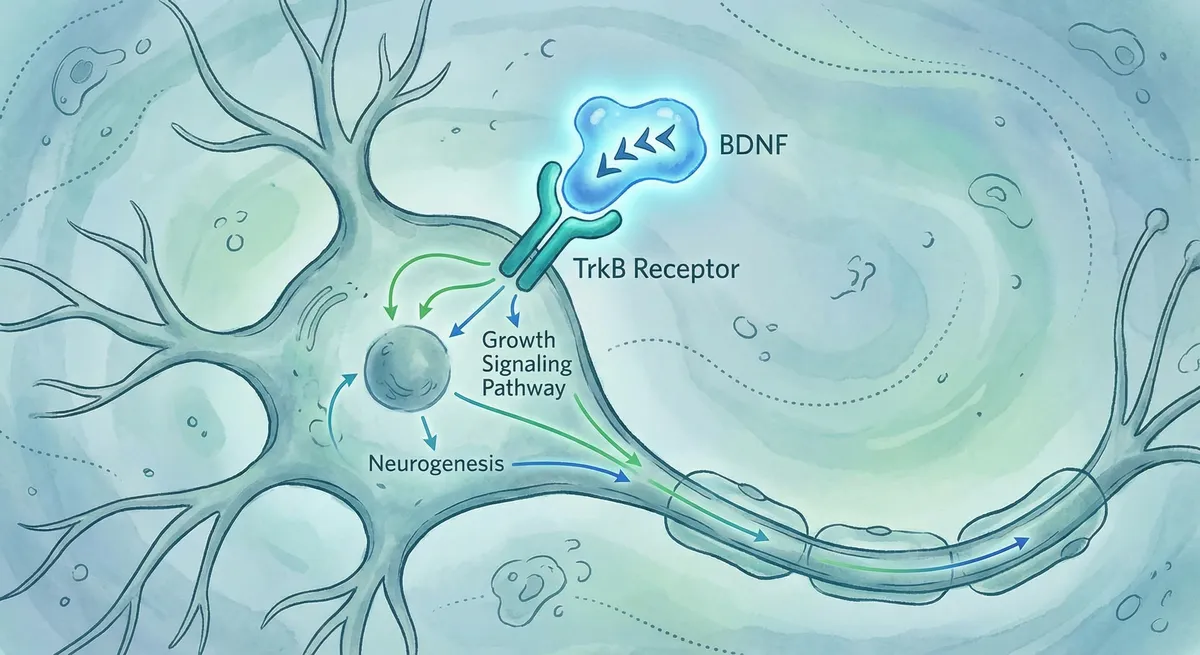
The anti-inflammatory properties of bdellins are mediated through inhibition of trypsin-like proteases involved in tissue degradation at the inflammatory focus. Additionally, both bdellastatin and bdellin B stimulate neurite outgrowth at very low concentrations — an activity attributed to possible interaction with trkA neurotrophin receptors (Fumagalli et al., 1999). This dual anti-inflammatory + neurotrophic profile is shared with eglins, suggesting a conserved evolutionary strategy in leech SGS.
LDTI — Leech-Derived Tryptase Inhibitor
4.5 kDa
Molecular Weight
46 amino acids, non-classical Kazal-type
1.4 nM
Ki (Mast Cell Tryptase)
One of only 2 known natural tryptase inhibitors
3
Disulfide Bonds
Compact scaffold allows ring entry
Solving the Tryptase Problem
The four monomers of mast cell tryptase form a ring-like structure with four active sites directed into a restricted oval-shaped interior space, making them inaccessible to high-molecular-weight inhibitors (Pereira et al., 1998). This structural arrangement explains why conventional protease inhibitors fail to block tryptase. <strong>LDTI is one of only two known natural tryptase inhibitors</strong> — the other being tick TdPI. Its compact 4.5 kDa structure allows it to enter the tryptase ring and achieve <strong>>90% inhibition</strong> of high-MW substrate cleavage (including tryptase-induced degradation of kininogen at 114 kDa) and suppression of tryptase’s mitogenic effects (Sommerhoff et al., 1994).
| Study | Design | Population (n=) | Intervention | Key Outcome | Result |
|---|---|---|---|---|---|
| Sommerhoff et al. 1994 | In vitro enzyme kinetics | LDTI vs mast cell tryptase, trypsin, chymotrypsin (n=NR) | Ki determination and substrate-size-dependent inhibition assay | Tryptase inhibition | Ki = 1.4 nM. Achieves >90% inhibition of high-MW substrate cleavage (kininogen 114 kDa) but only 50% inhibition of low-MW substrates LDTI is one of only two known natural tryptase inhibitors — the other is tick TdPI |
| Sommerhoff et al. 1994 | In vitro kinetics | LDTI (n=NR) | Ki determination | Trypsin and chymotrypsin inhibition | Trypsin Ki ~1 nM; Chymotrypsin Ki = 20 nM |
| Various / engineered variants 2000 | Protein engineering | LDTI variants 2T and 5T (n=NR) | P1 site mutations to introduce thrombin inhibitory activity | Dual tryptase + thrombin inhibition | 5T variant: Ki = 2.0 nM for thrombin while retaining tryptase inhibition Demonstrates scaffold engineering potential — non-classical Kazal-type → dual-target inhibitor |
Pharmaceutical Engineering Potential
Recombinant LDTI (r-LDTI) has been produced in both <em>E. coli</em> and yeast expression systems. Engineered variants — particularly the 5T mutant with P1 site modification — demonstrate that the LDTI scaffold can be converted to a dual tryptase + thrombin inhibitor (Ki 2.0 nM for thrombin). Additionally, LDTI at 20 µM inhibits HIV-1 replication. These findings demonstrate the pharmaceutical engineering versatility of the non-classical Kazal-type scaffold.
C1s Complement Inhibitor — Classical Pathway Block
Molecular Profile
- <strong>Molecular weight:</strong> 67 kDa
- <strong>Target:</strong> C1s subcomponent of classical complement pathway
- <strong>Mechanism:</strong> Blocks C1s catalytic activity → prevents C4/C2 cleavage → no C3 convertase formation → attenuates MAC formation
- <strong>Downstream effects:</strong> Reduced opsonization (C3b), reduced chemotaxis (C3a, C5a), reduced membrane attack (C5b-9)
Modern Pharmaceutical Parallels
- <strong>Sutimlimab (Enjaymo):</strong> Humanized monoclonal antibody targeting C1s. FDA-approved 2022 for cold agglutinin disease. Same target as SGS C1s inhibitor.
- <strong>Eculizumab (Soliris):</strong> Anti-C5 antibody. Different target (downstream in cascade) but same pathway. FDA-approved for PNH, aHUS.
- <strong>Ravulizumab (Ultomiris):</strong> Next-generation anti-C5 with extended half-life. Same pathway.
The leech C1s inhibitor represents an evolutionarily optimized anti-complement strategy that predates pharmaceutical complement therapeutics by millions of years.
Drainage & Vascular Components
Hyaluronidase (Spreading Factor)
Depolymerizes hyaluronic acid in connective tissue ground substance, increasing tissue permeability and facilitating drainage of inflammatory edema, exudate, and purulent contents. Creates a “spreading” effect that enhances penetration of other SGS components into surrounding tissue. The concurrent presence of protease inhibitors (eglins, bdellins) creates a balanced proteolytic environment that facilitates tissue remodeling without uncontrolled matrix degradation — a principle now recognized as essential in wound healing biology.
Kininases — Bradykinin Degradation
SGS kininases degrade bradykinin and other pro-inflammatory kinins at the bite site and in surrounding tissues. Since bradykinin is a key mediator of inflammatory pain signaling through B1 and B2 receptors, kininase activity provides the <strong>analgesic component</strong> of the SGS anti-inflammatory response. This mechanism explains the empirically observed pain-relieving effect of hirudotherapy — distinct from the vasodilatory and anti-thrombotic mechanisms mediated by other SGS components.
Histamine-Like Vasodilator
Produces local vasodilation and increased capillary permeability. Enhances blood flow to the inflammatory zone, facilitating immune cell recruitment and metabolic exchange needed for inflammation resolution. The erythema halo observed around the leech bite site is attributed to this compound. Unlike pathological histamine release (which amplifies inflammation), the SGS histamine-like vasodilator operates in concert with anti-inflammatory inhibitors, creating a controlled enhancement of local circulation rather than an inflammatory cascade.
Three-Phase Anti-Inflammatory Cascade
The anti-inflammatory effect of hirudotherapy operates through a temporally organized cascade — immediate, early, and sustained phases — each mediated by different combinations of SGS components and mechanical effects.
Phase 1: Immediate (Minutes)
- <strong>Histamine-like vasodilation</strong> enhances local blood flow to the bite site and surrounding tissue
- <strong>Hyaluronidase</strong> increases tissue permeability, facilitating SGS penetration and drainage of existing edema
- <strong>LDTI</strong> blocks mast cell tryptase, preventing amplification of inflammatory signaling cascade from degranulating mast cells
- <strong>Eglin c</strong> inhibits mast cell chymase (Ki 44.5 nM), providing additional mast cell stabilization
Phase 2: Early (Hours)
- <strong>Eglins b/c</strong> inhibit neutrophil elastase (Ki 0.2 nM) and cathepsin G (Ki 0.25 nM), blocking the neutrophil-mediated tissue damage axis
- <strong>Bdellins</strong> inhibit trypsin-like proteases at the inflammatory focus (Ki 0.1 nM for bdellin B3)
- <strong>C1s complement inhibitor</strong> attenuates classical complement pathway activation
- <strong>Kininases</strong> degrade bradykinin — analgesic effect
- <strong>Blood extraction + prolonged bleeding</strong> provide mechanical drainage of edema, exudate, and purulent contents (5–15 mL feeding + 30–50 mL post-detachment bleeding)
Phase 3: Sustained (Days–Weeks)
- <strong>Improved microcirculation</strong> enhances O₂ tension in capillary blood at the inflammatory site
- <strong>Enhanced lymphatic drainage</strong> accelerates removal of inflammatory mediators and metabolic waste
- <strong>Leukocytosis and enhanced phagocytic activity</strong> — stimulation of innate immunity promotes immune-mediated resolution
- <strong>Correction of lipid peroxidation-antioxidant defense</strong> balance (documented by Gileva, 1997)
Dual Systemic + Local Mechanism
Clinical Evidence Across 8 Specialties
Anti-inflammatory effects of hirudotherapy have been documented across surgical, gynecologic, dental/maxillofacial, otolaryngologic, ophthalmologic, rheumatologic, vascular, and urologic settings. The majority of evidence is Level III–IV (case series, observational studies). No randomized controlled trials have specifically evaluated the anti-inflammatory endpoint.
| Study | Design | Population (n=) | Intervention | Key Outcome | Result |
|---|---|---|---|---|---|
| Gileva 1997 | Experimental inflammation model | Maxillofacial inflammatory diseases (n=NR) | Hirudotherapy | Anti-exudative action, innate immune defense | Significantly pronounced anti-exudative action; stimulated innate immune defense (phagocytosis, lysozyme activity, CIC levels, lipid peroxidation-antioxidant defense correction) First controlled experimental demonstration of SGS anti-inflammatory mechanism |
| Zidra et al. 1997 | Clinical case series | Chronic periodontitis, periostitis, alveolitis (n=NR) | Hirudotherapy — systemic and local application | Anti-inflammatory resolution | Both systemic and local anti-inflammatory action documented. Successfully used as adjunct to conventional anti-inflammatory therapy in complicated dental caries Demonstrated dual systemic + local mechanism; series included 1995 and 1997 publications |
| Zimin 1998 | Case series | Purulent surgical wounds (n=59) | HT in postoperative period after surgical debridement | Post-operative wound complications | Substantially reduced complications. Improved microcirculatory oxygen tension, reduced compensated alkalosis in wound tissues, decreased suppuration risk Largest surgical anti-inflammatory dataset |
| Platonova 1998 | Case series | Postpartum women with infected perineal and cesarean sutures (n=NR) | Hirudotherapy at infected suture sites | Anti-inflammatory resolution of wound infection | Documented anti-inflammatory action with accelerated resolution of postpartum wound infections |
| Gromova 2000 | Case series | Acute and chronic salpingo-oophoritis (n=NR) | Hirudotherapy | Anti-inflammatory action in pelvic inflammatory disease | Accelerated resolution of salpingo-oophoritis with diminished inflammatory markers |
| Seleznev et al. 1992 | Case series with microbiological assessment | Otitis patients (n=NR) | HT sessions and SGS electrophoresis | Otitis resolution, microbial counts | Eliminated otitis and reduced microbial counts on external auditory canal surface Combined direct application and SGS electrophoresis |
| Moskalenko 2001 | Case series | Acute sinusitis (n=NR) | Hirudotherapy | Anti-inflammatory resolution | Anti-inflammatory agent effective in acute sinusitis |
| Magomedov 1998 | Case series with controls | Thrombophlebitis (n=NR) | Hirudotherapy at thrombophlebitis site | Anti-inflammatory and antithrombotic effects | Documented anti-inflammatory and antithrombotic action with controlled comparison One of few studies with control group |
| Eldor et al. 1998 | Clinical study | Post-thrombotic syndrome (n=NR) | Hirudotherapy | Anti-inflammatory effects in chronic venous disease | Confirmed anti-inflammatory benefit in post-thrombotic syndrome |
| Savinov & Kuchersky 1998 | Case series | Torpid chronic prostatitis (n=NR) | Hirudotherapy — perineal application | Prostatic drainage and clinical improvement rate | Improved prostatic drainage function; increased clinical improvement rate. Effect attributed to SGS microcirculation restoration and bacteriostatic, anti-inflammatory properties |
| Antipina 1997 | Case series | Facial carbuncles and furuncles (n=NR) | Hirudotherapy — direct application to lesion | Resolution of purulent skin lesions | Earlier resolution of soft tissue edema, reduction of hyperemia, cessation of wound exudation, accelerated granulation and epithelialization |
| Bondarevsky 1998 | Case series | Erysipelas, genital papillomavirus, Reiter disease, urogenital chlamydiosis (n=NR) | Hirudotherapy | Inflammatory process resolution | Favorable results across all conditions. Inflammatory processes diminished; morphological tissue structure restored Broadest range of infectious/inflammatory indications in a single report |
| Starodubskaya 1998 | Case series | Joint diseases (rheumatologic) (n=NR) | Hirudotherapy at affected joints | Anti-inflammatory action | Documented anti-inflammatory action in joint diseases |
| Shpolyansky 1944 | Case series | Parametrial and peritoneal infiltrates (n=NR) | Hirudotherapy | Resolution of inflammatory infiltrates | Accelerated resolution/absorption of parametrial and peritoneal infiltrates, prevented abscess formation Historical — among the earliest documented gynecologic anti-inflammatory applications |
| Specialty | Studies | Key Findings | Level |
|---|---|---|---|
| Surgical | Zimin 1998 (n=59) | Reduced wound complications, improved O₂ tension, decreased suppuration | III |
| Maxillofacial | Gileva 1997; Zidra 1995, 1997 | Anti-exudative action; used as adjunct to conventional therapy | III |
| Gynecologic | Shpolyansky 1944; Platonova 1998; Gromova 2000; Kurgina 2000 | Resolution of infiltrates, postpartum infection, salpingo-oophoritis | III–IV |
| Otolaryngologic | Seleznev 1992; Grigoriev 1998; Moskalenko 2001 | Eliminated otitis; anti-inflammatory in sinusitis/chronic otitis | III–IV |
| Vascular | Magomedov 1998; Eldor 1998 | Anti-inflammatory in thrombophlebitis and PTS | III |
| Dermatologic | Fedorova 1946; Antipina 1997 | Accelerated furuncle/carbuncle resolution | IV |
| Urologic | Savinov & Kuchersky 1998 | Improved prostatic drainage, increased clinical improvement rate | III |
| Rheumatologic | Starodubskaya 1998; Melnik 1999 | Anti-inflammatory action in joint diseases | IV |
Empirical Safety Observation
Intrinsic Anti-Inflammatory Protection at the Bite Site
Over decades of clinical experience, a consistent empirical finding has been noted: wound suppuration or signs of infection were <strong>never observed in standard hirudotherapy practice</strong>, even when the skin was prepared with non-sterile cotton, hands washed without soap, and non-sterile dressings applied (Isakhanyan, 1991). This observation — remarkable given the introduction of a biological agent through the skin barrier — supports the intrinsic antimicrobial and anti-inflammatory properties of leech SGS at the bite site.
Note: Modern practice requires standard antiseptic skin preparation and sterile dressing technique. The historical observation above is cited to illustrate the protective properties of SGS, not to recommend relaxed infection control.
Modern Pharmaceutical Parallels
The SGS anti-inflammatory profile intersects with multiple active areas of modern pharmaceutical development. These parallels validate the mechanistic framework without equating preclinical SGS data with clinical drug efficacy.
| SGS Component | Target | Modern Drug Parallel | Drug Status |
|---|---|---|---|
| Eglins b/c | Neutrophil elastase | Sivelestat (Elaspol) | Approved in Japan/Korea for ARDS |
| C1s complement inhibitor | Classical complement C1s | Sutimlimab (Enjaymo) | FDA-approved 2022 (cold agglutinin disease) |
| C1s complement inhibitor | Complement pathway | Eculizumab (Soliris) | FDA-approved (PNH, aHUS) — targets C5 |
| LDTI | Mast cell tryptase | Cromolyn sodium (mast cell stabilizer) | FDA-approved (asthma, mastocytosis) |
| LDTI | Mast cell tryptase | APC 366, BMS-262084 (tryptase inhibitors) | Clinical trials for asthma/IBD |
| Eglins b/c | Cathepsin G | Cathepsin G inhibitors (various) | Preclinical (COPD, RA, CF) |
Multi-Target Paradigm
Complete Anti-Inflammatory Component Summary
| Component | MW | Primary Target | Ki / Potency | Inflammatory Pathway Blocked | Phase |
|---|---|---|---|---|---|
| Eglins b/c | 8.1 kDa | Neutrophil elastase, cathepsin G | 0.2–0.3 nM | Neutrophil-mediated tissue destruction | Early |
| LDTI | 4.5 kDa | Mast cell tryptase | 1.4 nM | Mast cell amplification cascade | Immediate |
| C1s inhibitor | 67 kDa | C1s complement subcomponent | Stoichiometric | Classical complement cascade | Early |
| Bdellins A/B | 5.0–6.3 kDa | Trypsin, plasmin | 0.1–1 nM | Protease-mediated tissue degradation | Early |
| Hyaluronidase | ~27 kDa | Hyaluronic acid (ECM) | Enzymatic | Tissue edema, spreading | Immediate |
| Kininases | Variable | Bradykinin, kinins | Enzymatic | Pain signaling, vascular permeability | Early |
| Histamine-like | Low MW | Vascular smooth muscle | — | Local vasodilation (controlled, not inflammatory) | Immediate |
Clinical Applications — Anti-Inflammatory as Primary Rationale
The anti-inflammatory action of hirudotherapy operates through both systemic effects on the body and local effects at the inflammatory focus (Zidra et al., 1997). This dual action makes hirudotherapy applicable across a wide range of inflammatory conditions. The following applications use anti-inflammatory effect as the <em>primary</em> therapeutic rationale (as distinct from anticoagulant or decongestive rationale):
Purulent Surgical Conditions
Post-operative wound infections, furuncles, carbuncles. The combination of drainage (hyaluronidase + bleeding), protease inhibition (eglins), and microcirculation enhancement addresses multiple aspects of wound infection pathophysiology. Zimin (1998) documented reduced complications in 59 patients.
Gynecologic Inflammatory Diseases
Salpingo-oophoritis, parametritis, postpartum wound infections, bacterial vaginosis. Documentation spans from Shpolyansky (1944) through Gromova (2000). Anti-inflammatory + drainage mechanisms particularly relevant for pelvic inflammatory conditions with exudate formation.
Oral & Maxillofacial
Periodontitis, periostitis, alveolitis. Zidra et al. (1997) documented that hirudotherapy successfully used as adjunct to conventional anti-inflammatory therapy in complicated dental caries — one of the few direct comparison statements in the anti-inflammatory literature.
Vascular & Joint Inflammation
Thrombophlebitis, post-thrombotic syndrome, arthritis. The anti-inflammatory effect overlaps with anticoagulant and microcirculatory mechanisms, making attribution to specific SGS components difficult. The multi-target SGS profile addresses multiple pathways simultaneously.
Hirudotherapy should be considered as an adjunctive anti-inflammatory modality within comprehensive treatment plans rather than a standalone anti-inflammatory agent. Its multi-targeted mechanism may offer additive benefit when combined with conventional anti-inflammatory therapy. These applications are not FDA-cleared.
Evidence Gaps & Research Priorities
The anti-inflammatory mechanism of SGS is well-characterized at the molecular level, with kinetic data supporting sub-nanomolar potency against key inflammatory targets. However, the clinical evidence remains at Level III–IV — case series and observational studies without randomized controls or standardized anti-inflammatory endpoints (CRP, ESR, cytokine panels, validated inflammation scores). Key research priorities include:
- Controlled trials with inflammatory biomarkers: CRP, IL-6, TNF-alpha, complement activation markers (C3a, C5a, sC5b-9) before and after hirudotherapy
- Quantitative SGS delivery studies: How much of each anti-inflammatory component actually reaches the inflammatory focus? Tissue bioavailability data are needed
- Comparison with modern anti-inflammatory agents: Head-to-head comparison of SGS anti-inflammatory effect vs NSAIDs, corticosteroids, or biologics in specific inflammatory conditions
- Duration of anti-inflammatory effect: The sustained phase (days to weeks) needs documentation with serial biomarker measurements
- Mechanism attribution: Which SGS components are primarily responsible for the observed clinical anti-inflammatory effects? Component-specific studies (recombinant eglins, LDTI, C1s inhibitor) could resolve attribution
ASH supports the development of controlled clinical trials with standardized inflammatory endpoints to quantify the anti-inflammatory efficacy of hirudotherapy and enable evidence-based integration with conventional anti-inflammatory therapy.
Related Resources
Proteinase Inhibitors
Full molecular profiles of all 14+ SGS inhibitors.
Learn more →
Musculoskeletal Evidence
Arthritis and tendinopathy clinical data (Tier B).
Learn more →
Salivary Gland Secretion
Complete SGS composition overview.
Learn more →
Neurotrophic Effects
Shared neurotrophic activity of eglins and bdellins.
Learn more →